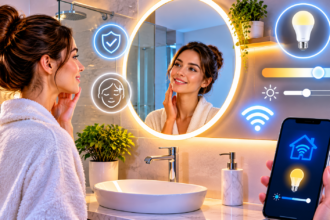

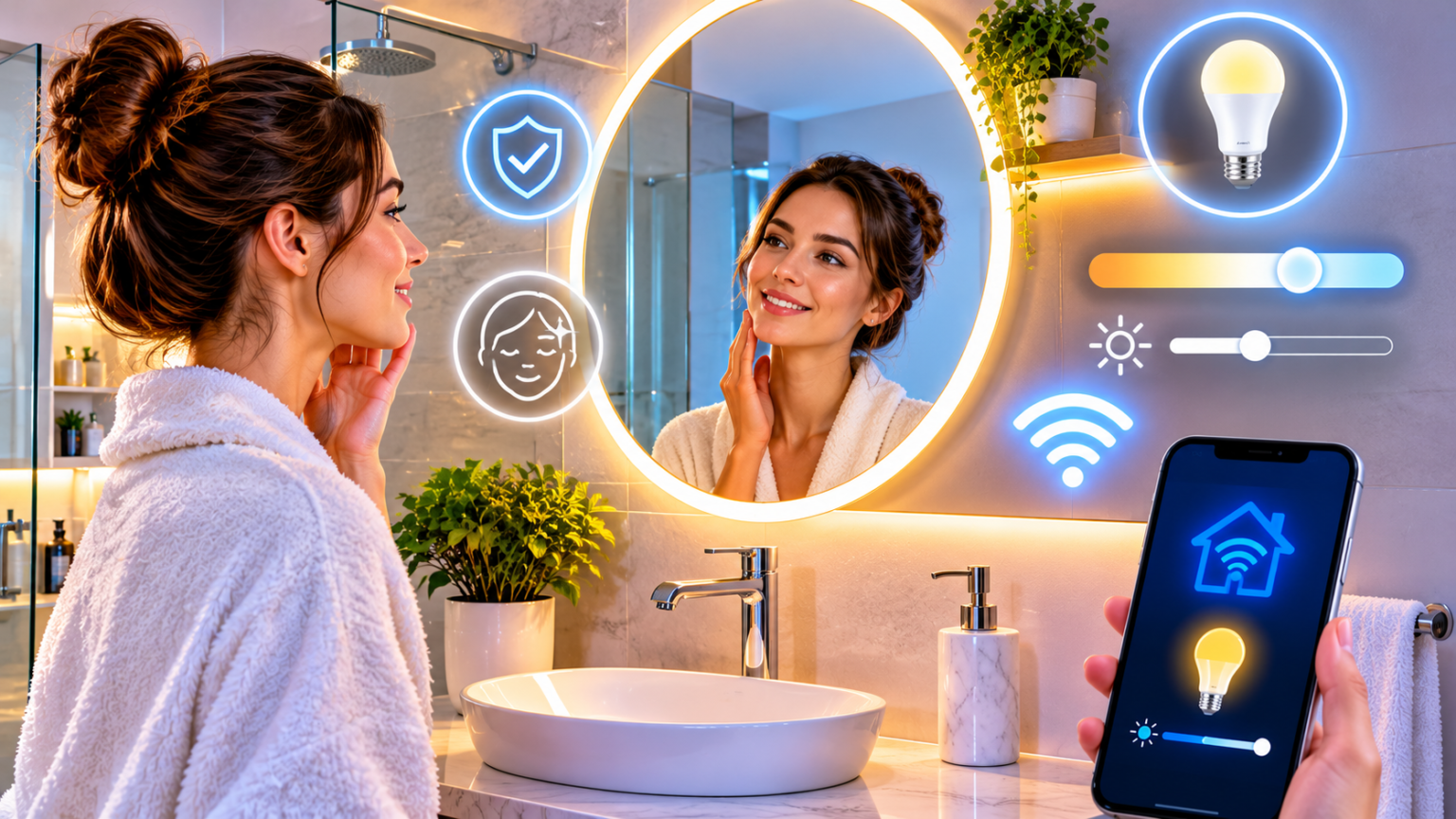
The best smart bathroom lighting combines moisture-rated fixtures, high-CRI tunable-white light at mirror height, and a very dim motion-activated night light. Choose bulbs and fixtures rated for damp spaces, then add simple scenes for morning, evening, and midnight visits.
This guide explains how to plan around moisture and safety, get flattering light at the mirror, compare product types, and automate everything. If you are new to smart bulbs, our beginner bulb guide is a good place to start.
How to Plan Smart Bathroom Lighting Before You Buy
A bathroom is the hardest room in the house for electronics. It is small, wet, steamy, and full of tile and glass. A light that works well in a bedroom can fail here in a few months if it is not made for the job.
Planning has two parts. First, you check moisture ratings, heat, and signal strength so the hardware survives. Second, you decide what kind of light you want at the mirror, overhead, and at night.
Moisture, Safety Ratings, and Where Lights Can Go
Start by looking at the room, not the product page. Note where the shower or tub sits, where the sink and mirror are, and what kind of fixtures already exist. This tells you which areas get splashed and which stay mostly dry.
Ingress Protection (IP) ratings tell you how well a fixture resists water and dust. The first digit covers solids, and the second covers liquids. For bathrooms, the second digit is the one that matters most. A rating like IP44 generally means the fixture resists splashes, while IP65 means it resists water jets. Higher numbers mean more protection.
Rules vary by country, and many regions divide the bathroom into zones. Areas close to a bath or shower often need higher ratings than areas near the door. Check your local electrical rules before you buy, and ask a licensed electrician if you are unsure. This is not a place to guess.
Enclosed fixtures are the next concern. Many bathroom ceiling lights have a glass cover that traps heat. Some smart bulbs are not designed to run inside a sealed fitting, and heat shortens their life. Look for bulbs labeled as suitable for enclosed fixtures, or choose a fixture with ventilation.
Steam and humidity also matter. Hot showers fill the room with moisture, which can creep into electronics that are not sealed. Choose products built for damp locations, and avoid placing a plug-in smart device where water can reach it.
Wi-Fi signal is a quiet problem. Tile, mirrors, metal, and distance from the router can weaken the connection. A bulb that works in the hallway can drop offline in the bathroom. Test the signal with your phone before you invest, and consider a mesh node if the signal is weak. Our guide to why smart devices go offline covers more fixes.
Then think about where each light goes. Use this simple checklist:
- Ceiling lights should be rated for damp locations and suited to enclosed fixtures.
- Mirror lights should sit at face height, on both sides if possible, with a suitable IP rating.
- Shower lights should have a high IP rating and be installed by a qualified electrician.
- Plug-in devices should stay far from water, and never in spots where steam or splashes land.
One point deserves emphasis: never touch mains wiring unless you are qualified. Swapping a bulb is easy. Replacing a fixture, adding a switch, or installing a light near a shower involves real shock and fire risks, and local codes may require a professional.
If you rent, you can still make big improvements without any wiring. A smart bulb in the existing fixture, a battery-powered stick-on light, or a plug-in night light all work without tools. Our guide to smart light bulbs for renters covers the same no-drill thinking. Before you buy a replacement bulb, also check the socket size, since smaller bases are common in vanity lights. Our E14 vs E27 compatibility guide explains the difference.
Finally, check whether your existing switch is a dimmer. Some older dimmers do not work well with smart bulbs and cause flicker or buzzing. If your bathroom already has a dimmer, read the bulb’s compatibility notes first.
Mirror, Ambient, and Night Lighting: Getting Light Quality Right
A bathroom needs three kinds of light, and most bathrooms only have one. Overhead light fills the room. Mirror light helps you shave, style hair, or apply makeup. Night light helps you move safely at 3 a.m. without waking up fully.
The most common mistake is relying on a single ceiling light. Light from directly above casts shadows under your eyes, nose, and chin. It makes you look tired, and it makes grooming harder. The fix is to add light at face height.
Mirror lighting works best when it comes from the sides, at or near eye level. Two vertical lights, one on each side of the mirror, fill in shadows evenly. A single bar above the mirror is the next best choice, but it still casts some shadow under the face. A light only below the mirror is the worst, since it creates an unflattering upward glow.
CRI (Color Rendering Index) is the number that matters most here. It measures how faithfully a light shows real colors. For grooming, look for CRI 90 or higher. Low-CRI light can make skin look gray and can cause makeup mistakes you only notice in daylight. We explain CRI in more detail in our guide to smart lighting for home offices, and the same logic applies at your mirror.
Color temperature is measured in Kelvin. Lower numbers are warmer, and higher numbers are cooler. Here is a practical guide:
- 2700K to 3000K: warm and relaxing, good for evening baths and winding down.
- 3500K to 4000K: neutral white, a flattering all-round choice for mirror light.
- 4500K to 5000K: cool and crisp, helpful for morning energy and detailed grooming.
This is where smart control helps. A tunable-white light can be bright and neutral in the morning, then warm and soft at night. Our guide to smart lighting scenes and color temperature shows how to build that rhythm across the whole house.
A useful tip is to match your mirror light to the light you will be seen in. If you do makeup, a neutral setting around 4000K is a safe middle ground. Checking the result near a window can also help you catch color mistakes before you leave home.
Brightness should be flexible. A bright setting is useful for shaving and skincare. A softer setting is better for a bath. A smart dimmer or smart bulb lets you change it without a second fixture.
Night lighting is the most underrated bathroom upgrade. Turning on a bright light at night wakes you up and makes it harder to fall back asleep. A very dim, warm light, around 1 to 10 percent, is enough to see where you are going. Many people choose a soft amber glow, since it is generally considered less stimulating than white or blue light.
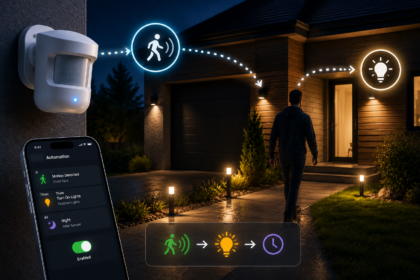
A motion sensor makes this effortless. The light turns on at a low level when you walk in, and off again after a short delay. Our guide to motion-sensor lighting covers how sensors work, and the same ideas apply indoors.
Last, think about glare off glossy surfaces. Tile, mirrors, and chrome reflect light. Choose diffused or frosted covers so the light looks soft instead of harsh. Matte finishes on walls and fixtures also help reduce hot spots and reflections.
Smart Bathroom Lighting Options Compared, Plus Setup and Routines
Once you know your room and the light you want, you can pick hardware. There are four common options, and each fits a different budget and level of commitment.
Here is a side-by-side comparison.
| Option | Best for | Main strength | Main drawback | Safety note |
|---|---|---|---|---|
| Smart bulb in an existing fixture | Renters, quick upgrades | Cheap, no wiring, color control | Needs an enclosed-fixture rating | Check heat and damp ratings |
| Smart switch or dimmer | Homeowners, permanent setups | Controls the whole fixture from the wall | Cannot change color on its own | Install by a qualified electrician |
| Smart lighted mirror | Grooming, makeup, shaving | Even light at face height | Higher cost, needs power nearby | Choose a suitable IP rating |
| Plug-in or battery night light | Night visits, all ages | Very dim, easy setup | Limited brightness range | Keep away from water splashes |
A few notes help you read this table.
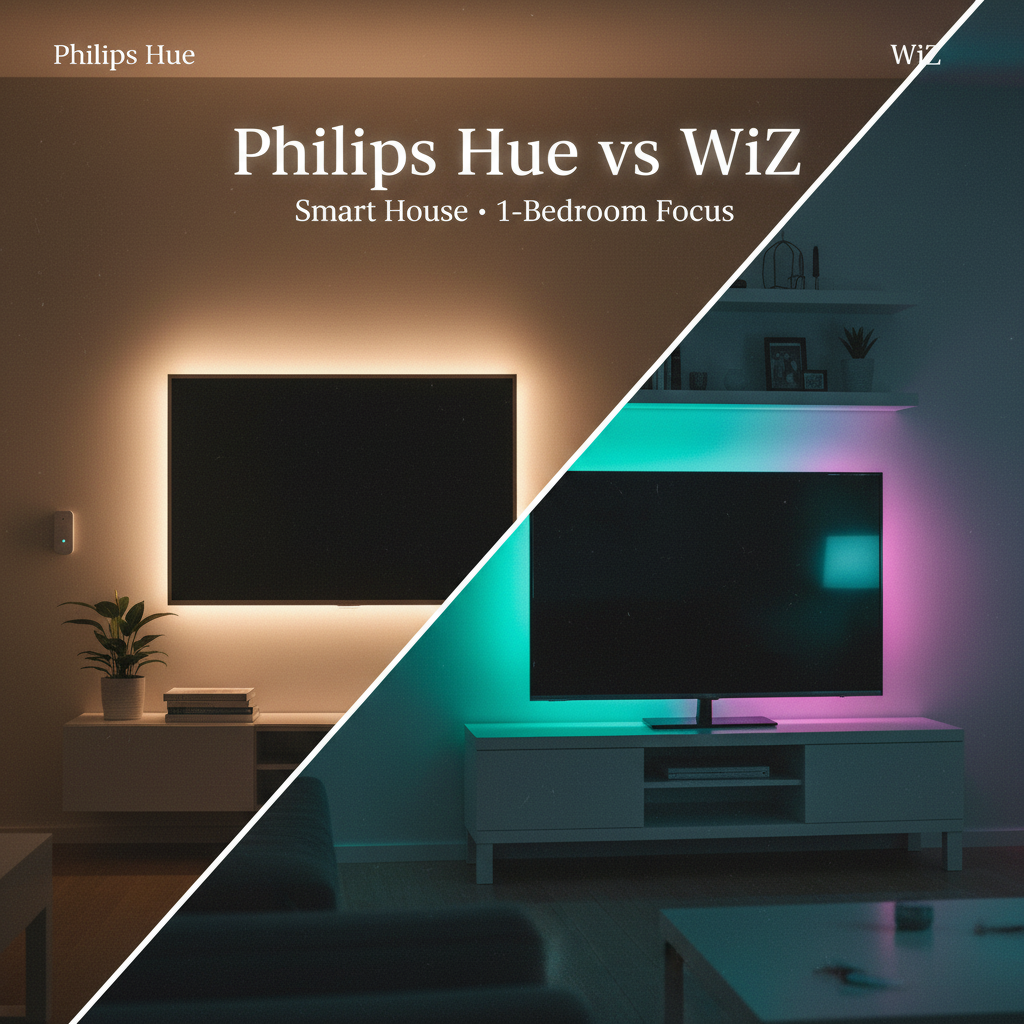
Smart bulbs are the easiest place to start. You screw one into the existing fixture and control it from your phone. If you are comparing brands, our Philips Hue vs WiZ guide explains the differences in app quality, hub needs, and price.
Smart switches keep your existing bulbs and add control from the wall. They suit homeowners who want a clean, permanent solution. For help choosing between a switch and bulbs, read smart switches vs. smart bulbs. In a bathroom, a switch is also useful because guests can flip it without needing an app.
Smart lighted mirrors solve the face-light problem in one purchase. Many have built-in tunable lights and a dimmer. They cost more, but they replace both a mirror and a vanity light.
Night lights are cheap and effective. Pick one with a motion sensor and a warm, low glow, and avoid models that are bright even at the lowest setting.
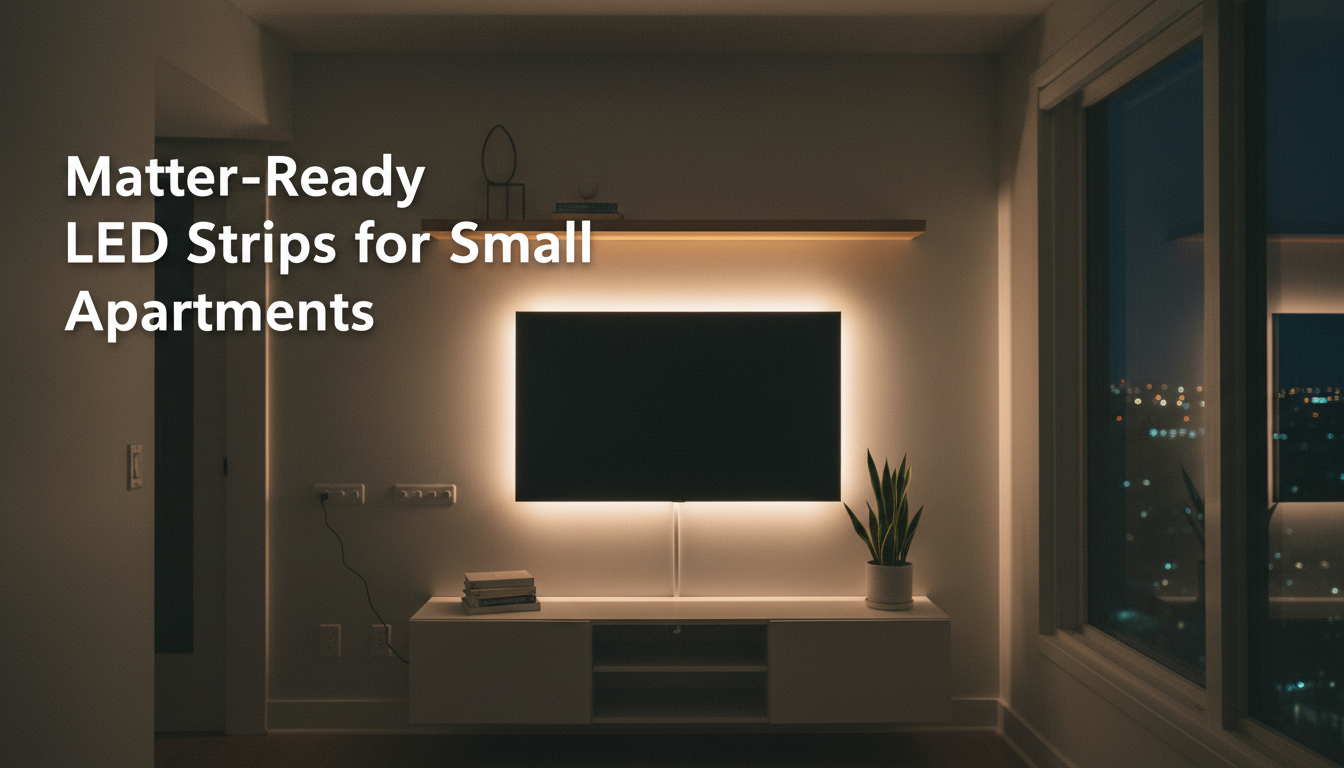
A word on LED strips. A strip under the vanity or behind the mirror can add a lovely soft glow. In a bathroom, though, moisture is a real concern. Use only strips with a suitable IP rating, and keep them away from direct water. Our guide to LED strips for small apartments explains mounting and power in detail.
A note on ecosystems. If you already use Apple Home, Google Home, or Alexa, choose lights that work with your platform. Lights that support Matter can often work with more than one, which helps in households where people use different phones. Our explainer on Matter multi-admin shows how that works.
How to set up a smart bulb in a bathroom fixture, step by step:
- Turn off the power. Switch off the light and wait for the bulb to cool before touching it.
- Check the socket and fixture. Confirm the base size and that the fixture can hold an enclosed-rated bulb.
- Install the bulb. Screw it in gently and restore power.
- Test the signal. Open your app in the bathroom and confirm the bulb connects quickly.
- Name the light clearly. Use a name such as “Bathroom Ceiling” so voice commands work reliably.
- Keep the wall switch on. A smart bulb needs constant power, so leave the switch on and control it by app, voice, or a battery remote.
- Create your first scene. Start with a bright morning setting and a soft evening setting.
That sixth step is worth repeating. If someone turns off the wall switch, the bulb loses power and disappears from your app. A small sticker on the switch, or a switch cover, helps everyone remember.
When the lights are installed, routines make them useful every day. Here are five worth setting up.
Five routines for a bathroom:
- Morning bright: On weekdays, turn on a neutral, bright white when the first motion is detected after the alarm.
- Grooming mode: With one voice command, set mirror lights to a neutral, high-brightness white.
- Bath mode: Dim the lights to a warm, soft level and turn off the bright mirror light.
- Night path: After bedtime, use motion to turn on a very dim, warm light, then turn it off after a short delay.
- Auto off: Turn the lights off after a period with no motion, so they are never left on all day.
Keep the night path very dim, and keep the delay short. A light that stays on for ten minutes after a quick visit is more annoying than helpful.
If a routine fails, the cause is usually a lost connection, a naming mismatch, or a conflict between scenes. Our guide on why smart home routines fail walks through the most common fixes.
Frequently Asked Questions
Are smart bulbs safe in a bathroom?
They can be, if the bulb and fixture suit damp locations and the fixture allows enclosed bulbs. Avoid direct water contact, and check the manufacturer’s guidance. For anything involving wiring near a shower, hire a licensed electrician.
What IP rating do I need for bathroom lights?
It depends on where the light sits and your local rules. Areas near a bath or shower usually need higher ratings than areas farther away. Check your local electrical regulations, and ask a professional if you are unsure.
What is the best color temperature for a bathroom mirror?
A neutral white around 3500K to 4000K is a flattering, accurate choice for most people. Pair it with a CRI of 90 or higher. A tunable light lets you shift warmer in the evening and cooler in the morning.
Why does my smart bulb keep going offline in the bathroom?
Tile, mirrors, and distance from the router often weaken the signal. Try moving the router, adding a mesh node, or choosing a bulb with a stronger connection type. Also check that nobody turned off the wall switch.
Can I use a smart dimmer with smart bulbs?
Usually it is better not to. A smart bulb and a dimmer both try to control brightness, and the result can be flicker or poor behavior. Choose one control method per fixture, and read the compatibility notes before buying.
Can I install smart bathroom lighting without wiring?
Yes. A smart bulb in an existing fixture, a battery-powered light, or a plug-in night light needs no wiring. For switches, mirrors, or lights near the shower, ask a qualified electrician.
Conclusion
Good bathroom lighting is not about buying the fanciest product. It is about choosing hardware that survives moisture, then placing the right light in the right spot. Look for damp-rated fixtures, put light at face height, and choose CRI 90 or higher with tunable white.
Use a smart bulb if you rent, and a smart switch or lighted mirror if you own. Then add a few simple scenes: a bright one for the morning, a soft one for the evening, and a dim motion-activated night path.
Start small. One better mirror light, or one night light with a motion sensor, can change how the whole room feels. Once you see the difference, adding the rest takes very little effort.