







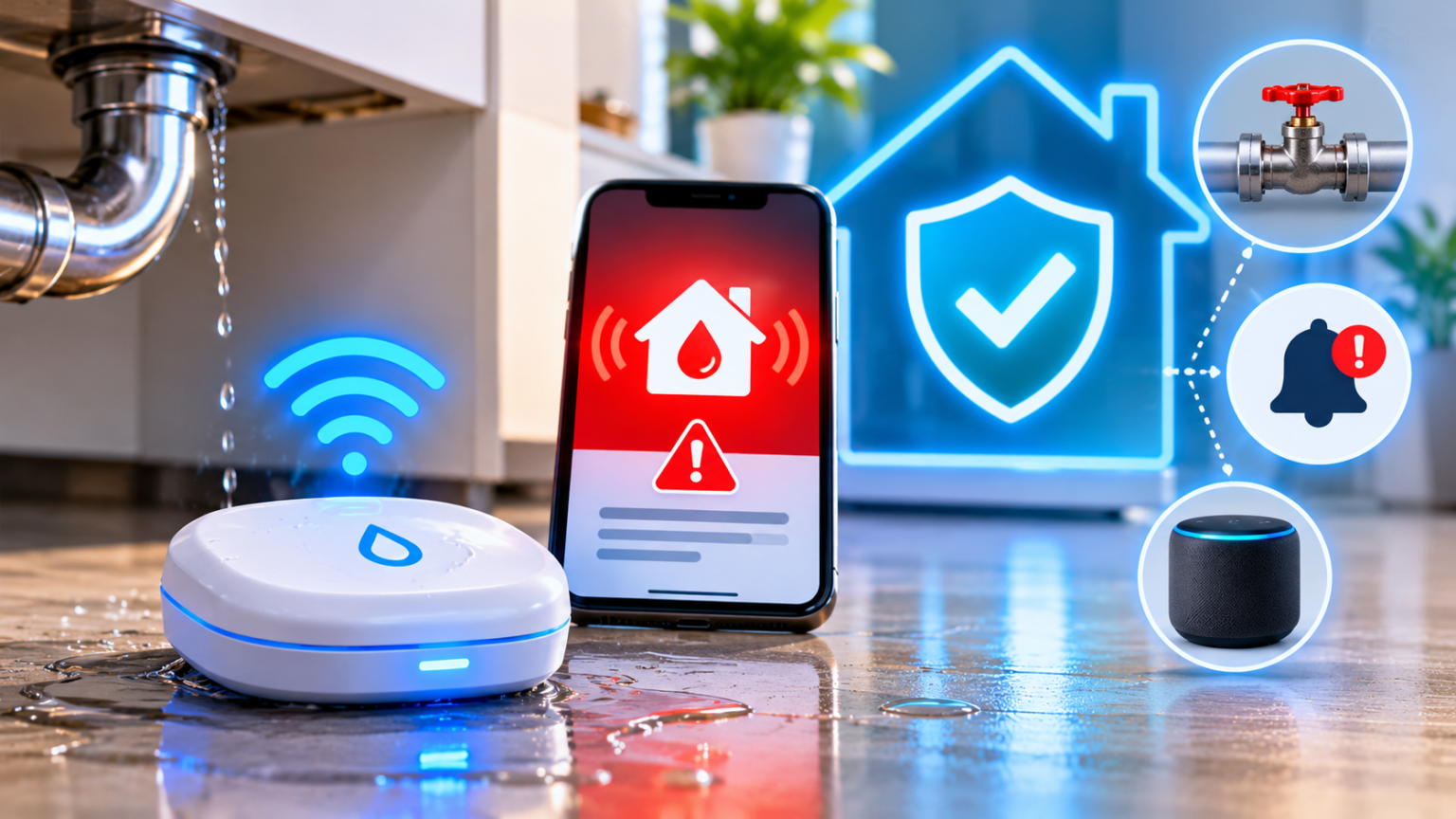
The best smart water leak detector setup for most homes is a handful of battery-powered spot sensors placed under sinks and next to appliances, plus an automatic shutoff valve on the main line if you own your home. Add phone alerts and a loud local alarm, and a small drip never becomes a flood.
This guide explains where leaks start, how to compare sensors and valves, and how to automate your response. If you are still building your security basics, start with our guide to smart home security for beginners.
How to Plan a Smart Water Leak Detection Setup Before You Buy
Water damage is quiet. A burst pipe is dramatic, but most leaks start as a slow drip behind a wall or under a cabinet, and they can run for days before anyone notices. By then, floors, drywall, and belongings may already be ruined.
Planning has two parts. First, you find the places where leaks are most likely to start. Second, you decide how you want your home to respond when one happens.
Find Your Leak Risks: Where Water Problems Start
Walk through your home with a simple question: where is there a pipe, a hose, or a tank? Water has to come from somewhere, and the same dozen spots cause most household leaks.
Under sinks are the most common place for slow leaks. Supply lines, drain traps, and shutoff valves all sit in a cramped, dark cabinet that most people rarely open. A small drip here can soak the cabinet floor for weeks.
Washing machines are a major risk. The rubber supply hoses are under constant pressure, and they can crack or burst with age. A leak here can release a large volume of water quickly, especially if nobody is home.
Dishwashers and refrigerators are easy to forget. A dishwasher has a supply line and a drain hose. A fridge with an ice maker or water dispenser has a thin supply tube that can crack or loosen behind the appliance.
Water heaters are another key spot. Tanks corrode over time and can leak from the base or the fittings. If your heater sits in a closet, an attic, or a finished basement, a leak can cause serious damage before you see it.
Toilets can leak at the supply line or around the base. Slow leaks here are often hidden behind the bowl or under the tank.
Basements and low points collect water from outside as well as from pipes. Heavy rain, a failed sump pump, or a high water table can all flood a basement. A sensor at the lowest point gives you early warning.
HVAC equipment produces condensation, and the drain line can clog. A blocked condensate line can overflow into a ceiling, a closet, or an attic. Our guide to smart air conditioners explains how these systems drain, which helps you spot where a sensor makes sense.
Frozen pipes are a cold-weather risk. When water freezes, it expands and can split a pipe. The damage often appears only after the ice thaws. A temperature sensor near exposed pipes can warn you before that happens.
A quick note on humidity. A leak sensor detects liquid water, not damp air. If you worry about moisture in a basement or bathroom, a humidity sensor is a useful companion. Our guide to smart humidity control explains how to tell the difference.
Next, think about who is affected. Use this simple checklist:
- Homeowners can protect the whole house with a shutoff valve and sensors.
- Renters usually cannot modify plumbing, so sensors and alerts are the main tool. Tell your landlord if you find a problem.
- Frequent travelers benefit most from automatic shutoff, since nobody is home to react.
- Older family members may not notice a slow leak or hear a quiet alert. Our guide to smart home kits for aging in place covers devices that help in these situations.
One point about insurance is worth mentioning. Some insurers offer discounts or incentives for leak detection or automatic shutoff systems, but policies and rules vary. Check with your own provider rather than assuming a benefit.
Finally, think about the speed of response. A sensor that sends a phone notification is helpful only if you see it. If you sleep with your phone on silent, or you are on a flight, an alert alone may not be enough. That is why many people pair sensors with a shutoff valve or a loud local alarm.
Know the Tech: Sensors, Flow Monitors, and Shutoff Valves
Leak protection comes in three main layers. Each does a different job, and the strongest setups combine them.
Spot leak sensors are the simplest layer. These small pucks sit on the floor and have metal contacts on the bottom. When water bridges the contacts, the sensor sends an alert. They are cheap, battery-powered, and easy to place under a sink or beside an appliance.
Rope or cable sensors extend the idea. A thin cable lets you cover a longer area, such as the perimeter of a water heater or the back of a washing machine. They are useful where water could travel along a wall or floor.
Flow monitors take a different approach. Instead of waiting for water to hit the floor, they measure how much water moves through a pipe. If the flow pattern looks abnormal, such as a constant trickle for hours, the system warns you. Some clamp onto a pipe without cutting it, while others need a plumber to install them.
Automatic shutoff valves are the strongest layer. A motorized valve is installed on your main water line, and when a sensor detects a leak, the valve closes. This stops the flow before the damage spreads. Installation usually requires a licensed plumber, and local rules may apply.
When you compare products, look at these key features:
- Battery life: many sensors last one to several years, depending on the model and how often they report. Choose one that warns you before the battery dies.
- Connection type: Wi-Fi sensors are simple but can drain batteries faster. Zigbee, Z-Wave, Thread, and Bluetooth options often last longer, but may need a hub.
- Local alarm: a built-in siren makes noise even when your internet is down.
- Water resistance: the sensor itself should survive getting wet.
- Extra sensing: some units also measure temperature or humidity, which helps with freeze warnings.
Connection type deserves extra thought. Basements and utility closets often have weak Wi-Fi, since walls, pipes, and appliances block signals. A sensor that drops offline is a sensor that cannot warn you. Our guide to why smart devices go offline explains how to improve coverage.
Power matters too. Battery sensors are flexible and work during a power outage. Plug-in units can be more powerful, but they stop working if the power goes out, which is often when a storm causes flooding. Look for a backup battery if you choose a plug-in model.
Smart home compatibility is the next check. If you already use Apple Home, Google Home, or Alexa, make sure the sensor works with your platform. Our explainer on Matter multi-admin shows how one device can work across several ecosystems.
Finally, think about valve type. Most shutoff valves use a motorized ball valve, which turns a quarter turn to open or close. Some can be tested remotely and report their status. Look for a valve that fails safely, and check what happens during a power outage or a lost connection.
A safety note applies to flooding. If a leak has reached electrical outlets or appliances, do not touch them or stand in standing water. If it is safe to reach the breaker panel, turn off power to the affected area, and call a qualified professional. Your safety matters more than your belongings.
Smart Leak Protection Options Compared, Plus Setup and Automations
Once you know your risks and the technology, you can compare real options. There are four common routes, and each fits a different home and budget.
Here is a side-by-side comparison.
| Option | Best for | Main strength | Main drawback | Install effort |
|---|---|---|---|---|
| Battery spot sensors | Renters, small homes | Cheap, no tools, flexible | Alert only, no shutoff | Very low |
| Sensors plus smart siren | Homes with sleepers or older residents | Loud local warning | Still needs someone to act | Low |
| Flow monitor | Whole-home early warning | Detects hidden leaks | Higher cost, may need a plumber | Medium |
| Sensors plus automatic shutoff valve | Homeowners, frequent travelers | Stops water automatically | Highest cost, plumber install | High |
A few notes help you read this table.
Spot sensors are the best starting point for almost everyone. A small set costs little and covers the most common leak spots. If you rent, this may be all you need.
Sensors with a siren add a layer of safety. A loud alarm wakes sleepers and alerts neighbors, even when the internet is down. It is a smart upgrade for homes with older residents or people who sleep deeply.
Flow monitors are best for hidden leaks, such as a slow drip inside a wall. They also help you understand your normal water use, which makes strange patterns easier to spot.
Shutoff valves are the most complete solution. They act in seconds, whether you are at work or on vacation. They are worth considering if your home has a finished basement or valuable flooring, or if you travel often.
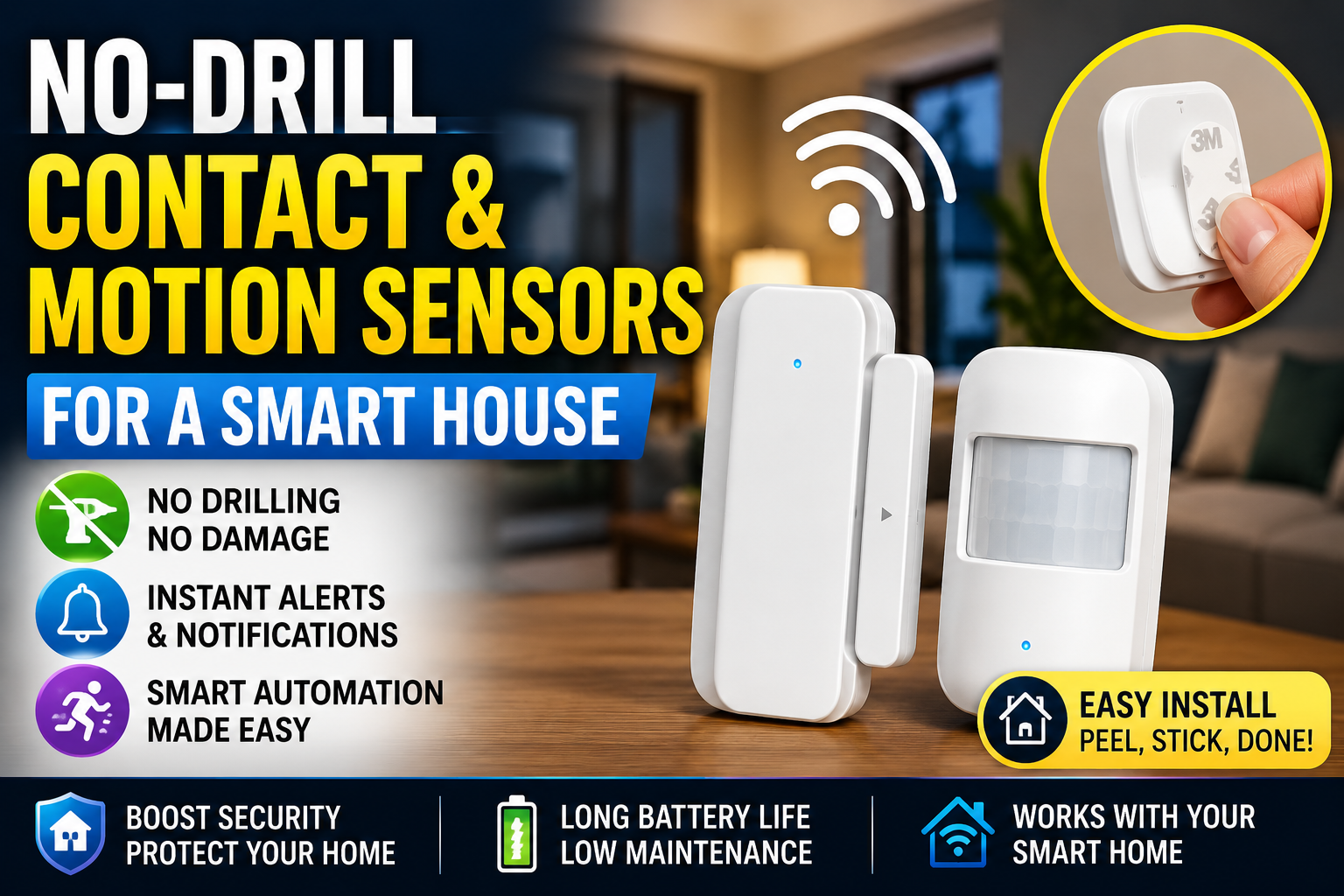
A word on how this fits with other security devices. Leak sensors work well alongside contact and motion sensors. Our guide to no-drill contact and motion sensors explains how to place those, and our guide to a DIY alarm without monthly fees shows how to combine several sensor types into one system.
If your water risk is in a garage or utility area, our guide to a smart garage setup covers remote monitoring that pairs well with leak sensors.
How to set up leak sensors, step by step:
- List your risk spots. Write down every sink, appliance, tank, and low point worth protecting.
- Test before placing. Pair each sensor with your app and confirm it connects from the spot where it will sit.
- Place the sensor flat on the floor. Put it where water would collect first, such as the lowest point under a sink or beside a washer.
- Keep it clear of obstructions. Make sure nothing covers the contacts, and nothing blocks the signal.
- Name each sensor clearly. Use names such as “Kitchen Sink Leak” or “Water Heater Leak” so alerts make sense at a glance.
- Turn on notifications. Allow critical alerts on your phone, so they appear even in silent mode if your device supports it.
- Test with a wet finger or damp cloth. Confirm that the alert arrives, and note how long it takes.
When the sensors are running, automations turn alerts into action. Here are five worth setting up.
Five automations for leak protection:
- Leak shutoff: When any sensor detects water, close the main shutoff valve and send an alert.
- Light flash: Flash lights in the hallway or bedroom when a leak is detected, so you notice even if your phone is quiet.
- Siren trigger: Sound a local siren if a leak is detected while you are home, especially at night.
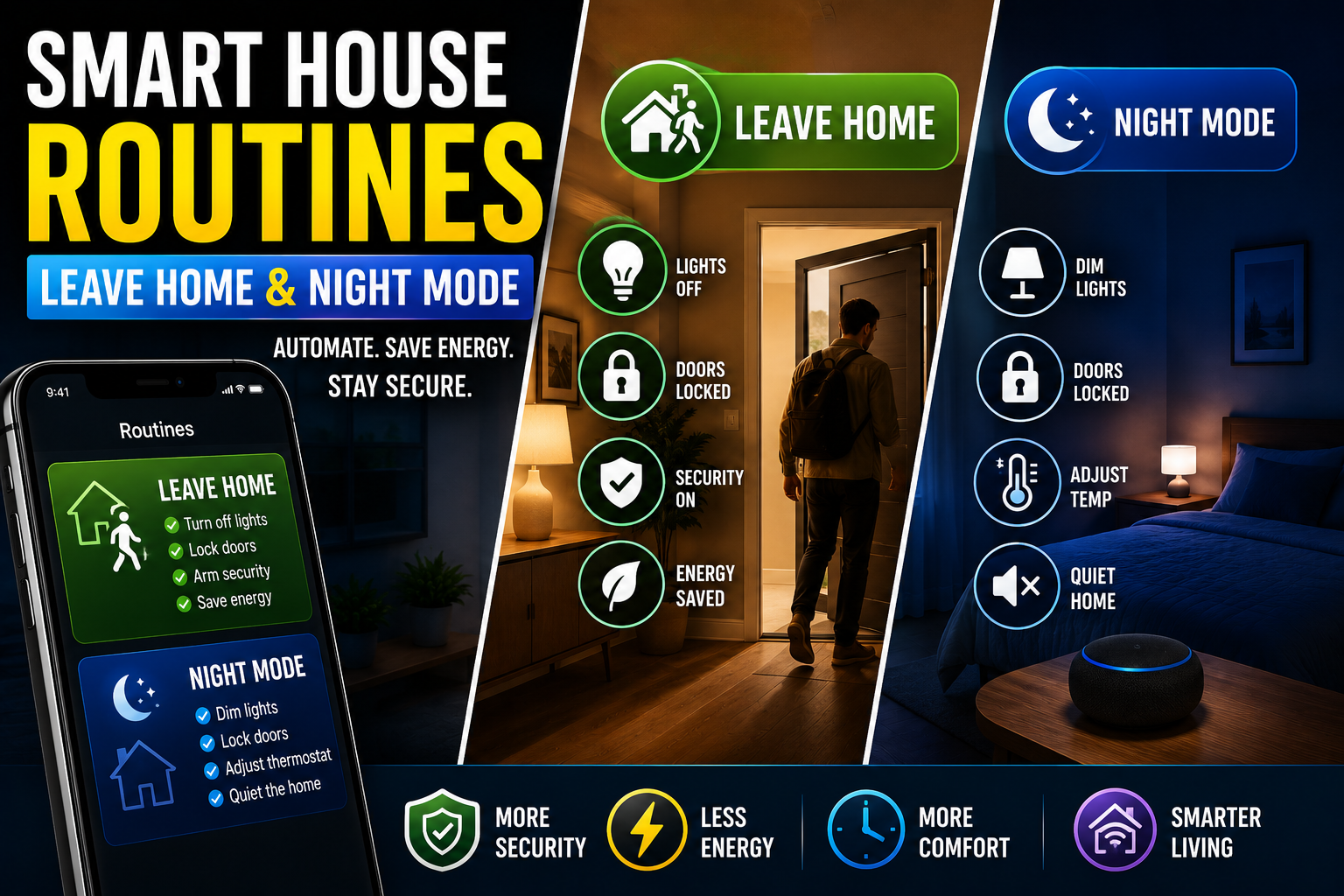
- Away watch: When everyone leaves, raise the alert level and send a summary if any sensor goes offline. Our guide to welcome home automations explains how presence detection works.
- Freeze warning: In cold weather, alert you if the temperature near exposed pipes drops near freezing.
Some setups are worth adding as a vacation routine. Before a long trip, you can close the main valve, check that every sensor reports normally, and enable extra alerts. Many people find this simple routine gives real peace of mind.
Keep automations reliable and simple. A system that sends too many false alarms trains you to ignore it. Test each sensor, fix any weak connections, and keep a small number of clear rules.
Maintenance matters as much as setup. Test your sensors every few months, replace batteries on schedule, and check valves for smooth operation. A sensor with a dead battery is worse than no sensor, because it gives you false confidence.
If an automation fails, the cause is usually a lost connection, a low battery, or two routines that conflict. Our guide on why smart home routines fail walks through the most common fixes. Also consider your privacy settings. Our guide to voice assistant privacy explains how to review what your connected devices share.
Frequently Asked Questions
How many leak sensors do I need?
Start with one for each high-risk spot: under the kitchen sink, behind the washing machine, near the water heater, and at the lowest point of a basement. Add more for bathrooms, the dishwasher, and the fridge. A small home may need four to eight.
Do leak sensors work without Wi-Fi?
Some do. Models with a built-in siren sound a local alarm even when the internet is down. Bluetooth and Zigbee sensors can also work through a hub or a nearby device. Wi-Fi models give the best remote alerts, but only while your network is online.
Can renters use automatic shutoff valves?
Usually not, since most valves are installed on the main water line and need a plumber. Ask your landlord first. Many renters rely on sensors and alerts, and some use portable devices that attach to a single appliance supply line.
How long do leak sensor batteries last?
It depends on the model and connection type. Many last one to several years. Choose a sensor that reports low battery in the app, and test it every few months so you know it still works.
Will a leak sensor detect a leak inside a wall?
A spot sensor only detects water that reaches it. For hidden leaks, a flow monitor is more useful, since it notices unusual water use. If you suspect a hidden leak, contact a plumber for a proper inspection.
What should I do when I get a leak alert?
Stay calm and check the area, if it is safe. Turn off the water at the main shutoff or the local valve. Avoid touching electrical items near water, and turn off power only if you can reach the panel safely. Then contact a plumber, and your insurer if needed.
Conclusion
Water leaks are one of the most common and costly home problems, and they are also one of the easiest to catch early. A few small sensors in the right places can turn a hidden drip into a simple fix.
Start with spot sensors at your highest-risk spots. Add a local siren if you want louder warnings, and consider a shutoff valve if you own your home or travel often. Then connect everything to a few simple automations.
Start small. Place a sensor under your kitchen sink and behind your washing machine this week. Once you see how easy it is, protecting the rest of the house takes very little effort.