






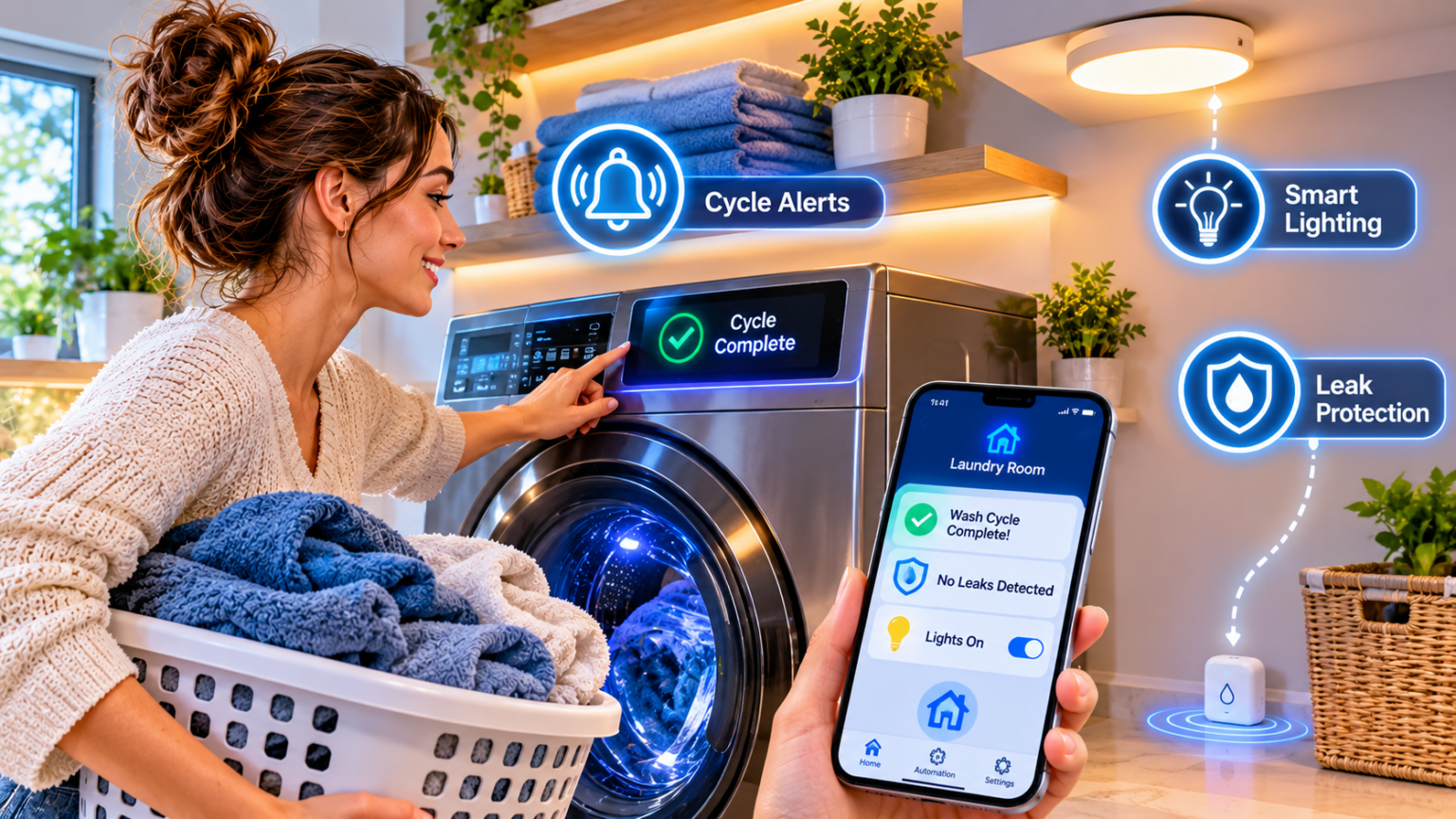
The best smart laundry room setup combines cycle-done alerts, a water leak sensor, motion-activated lighting, and humidity-aware ventilation. Most of it works with small, cheap devices you can add without touching your plumbing or wiring, even if your washer and dryer are not smart.
This guide explains how to map your laundry space, choose the right sensors, compare options, and automate it all. If you want a room that protects your home as well as saves time, start with the plan below.
How to Plan a Smart Laundry Room Before You Buy
A laundry room looks simple, but it combines almost every household risk in one small space. It has water, heat, electricity, lint, humidity, and heavy machines that shake. It is also a room you visit often, usually with your hands full.
Planning has two parts. First, you map the room and its hazards. Second, you choose the sensors and devices that solve your real problems, such as forgotten loads, leaks, and dark corners.
Map the Room: Machines, Power, Water, and Ventilation
Start by standing in the doorway and looking at the room as if you were a visitor. Where are the machines? Where does the water come in? Where does the hot air go? These answers decide what is worth buying.
The machines come first. Check whether your washer and dryer are already smart. Many newer models have Wi-Fi and an app that sends a notification when the cycle ends. If yours do, you may only need a few extras. If they do not, small add-on sensors can give you similar alerts.
Also note the type of dryer. An electric dryer uses a high-power connection. A gas dryer uses a gas line and also an electrical outlet. This matters for safety, because fuel-burning appliances can produce carbon monoxide, and the room needs the right alarms.
Power is the next question. Count the outlets near the machines, and check what is plugged into each one. Washers and dryers draw a lot of power, and most smart plugs are not designed for that load. Never plug a heavy appliance into a smart plug unless the plug is clearly rated for it. A dryer on a dedicated high-power connection should never go through a standard smart plug.
Water is the biggest risk. Washing machines have hot and cold supply hoses under constant pressure, plus a drain hose. A hose that fails can release a lot of water quickly, especially when nobody is home. A leak sensor on the floor beside the machine is cheap protection. Our guide to smart water leak detectors explains where to place sensors and how shutoff valves work.
Heat and lint matter just as much. Dryers produce hot, dry air and a large amount of lint. Lint builds up in the filter and in the vent duct, and it is flammable. Cleaning the lint filter after every load and checking the vent regularly are basic safety habits, and no smart device replaces them.
Fuel and fumes come from gas dryers, water heaters, and furnaces that often sit in or near the laundry room. A smoke alarm and a carbon monoxide alarm are essential here. Our guide to smart smoke and carbon monoxide detectors explains where to place them and what to look for.
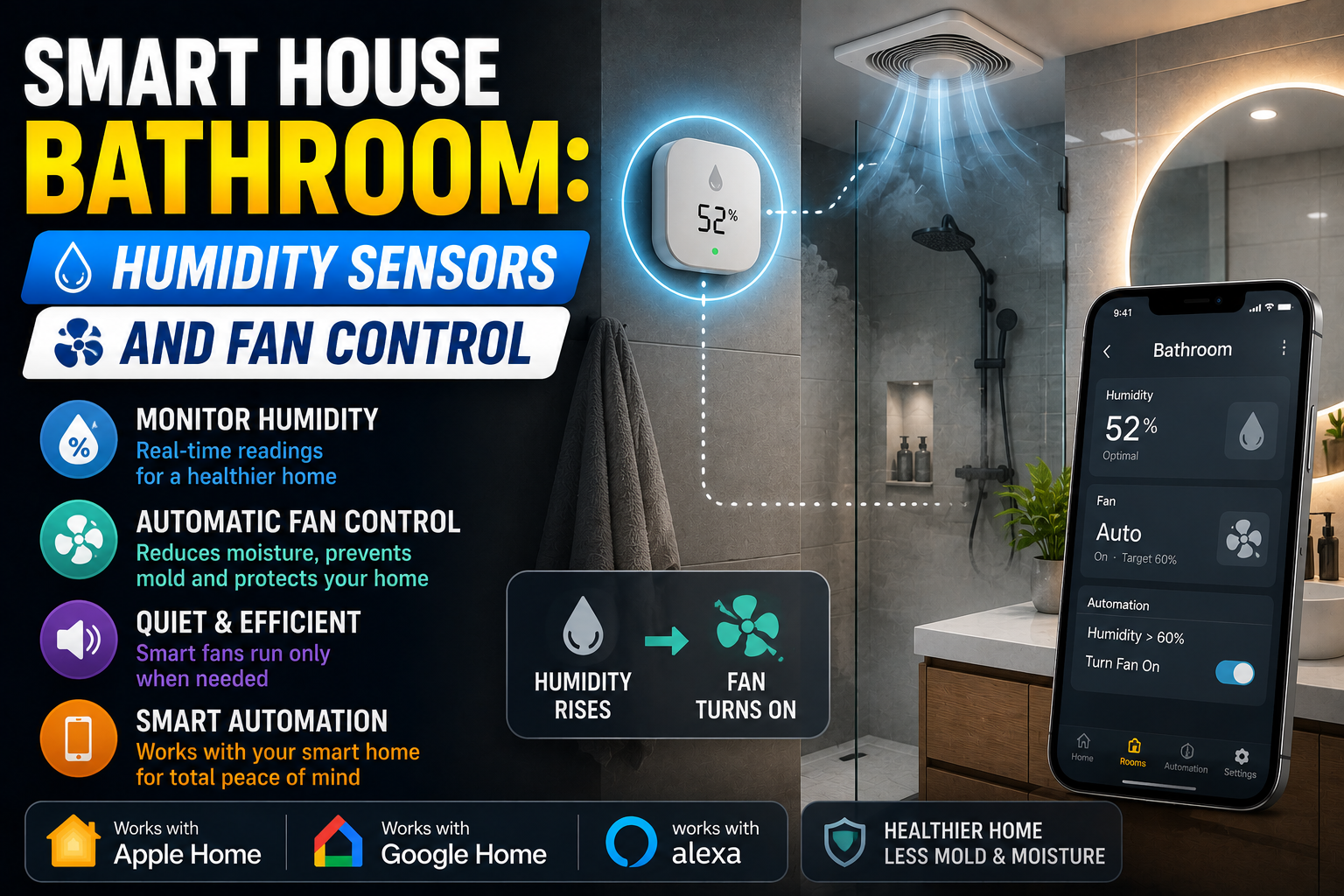
Humidity and ventilation are the last piece. A damp laundry room can grow mildew, especially if clothes dry indoors. A vent fan or a window helps, and a humidity sensor tells you when the air stays too wet. Our guide to smart bathroom humidity sensors and fan control uses the same idea, and our guide to smart humidity control explains when a sensor, a dehumidifier, or both make sense.
Wi-Fi signal is a quiet problem. Laundry rooms often sit in basements, garages, or closets, and metal appliances block signals. A device that drops offline cannot warn you. Check the signal with your phone before you buy anything, and see our guide to why smart devices go offline if the connection is weak.
Next, think about how you actually use the room. Use this simple checklist:
- Do you forget loads in the washer? Cycle alerts will help most.
- Do you carry baskets with both hands? Hands-free lighting is a big upgrade.
- Is the room near a bedroom? Noise and night-time schedules matter. Our guide to how to build a smart bedroom covers quiet routines.
- Does anyone leave the house while a load runs? Leak protection matters more when nobody is home.
- Do you dry clothes indoors? Humidity control matters more.
If you rent, you probably cannot change plumbing or wiring, but you can still do a lot. Stick-on sensors, battery-powered lights, and small plug-in devices need no tools. Ask your landlord before you touch anything permanent.
A quick note on garages and basements. Many laundry rooms share space with a garage. If yours does, our guide to a smart garage setup covers remote monitoring that pairs well with laundry sensors.
Choose the Right Sensors: Cycle Alerts, Leak Protection, and Lighting
A smart laundry room is built from a few simple jobs. Each job has a small device that does it well. You do not need all of them, so start with the problems that annoy or worry you most.
Job one: know when the cycle is done. There are three common ways to get a notification.
- Built-in smart features on a connected washer or dryer send an alert straight to your phone. This is the cleanest option if your machines support it.
- Vibration sensors stick to the side of the machine and detect when it shakes. When the shaking stops, the sensor reports that the cycle ended. They work on almost any machine.
- Power-monitoring plugs measure how much electricity the machine uses. When the power drops to near zero, the cycle is done. These are only suitable for machines within the plug’s rated power, so check the rating carefully.
Vibration sensors are the safest and most universal choice, because they do not touch the electrical supply. A power-monitoring plug can work for a small appliance, but not for a typical dryer.
Job two: catch leaks early. A leak sensor is a small puck that sits on the floor and sends an alert when water touches it. Place one beside the washer, one under the utility sink, and one near the water heater if it is in the room. If you own your home and travel often, consider an automatic shutoff valve for the washer supply or the main line, installed by a licensed plumber.
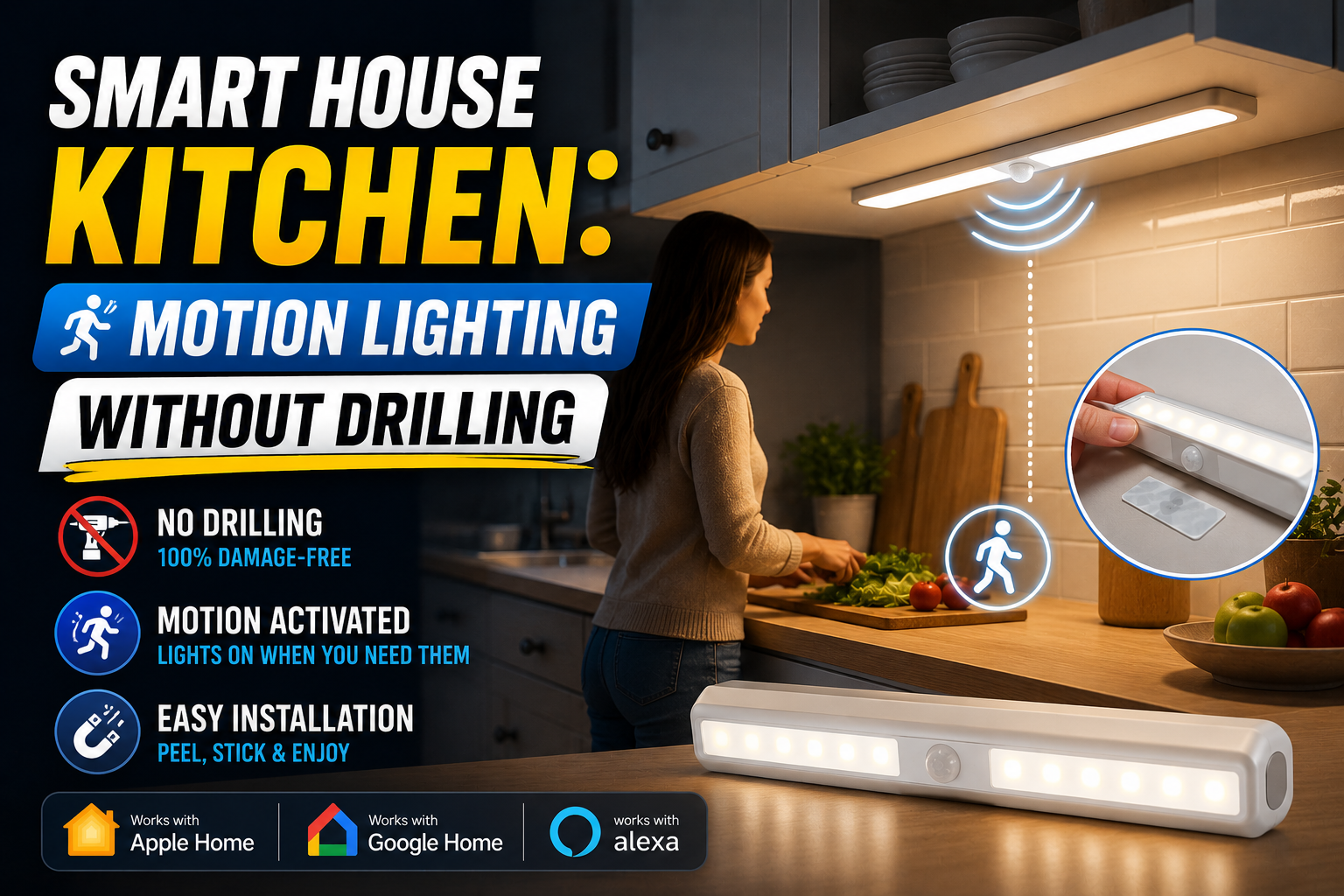
Job three: light the room when you need it. A motion sensor turns on the lights when you walk in with a basket, and turns them off when you leave. This matters in a laundry room, because your hands are usually full. Our guide to smart kitchen motion lighting without drilling shows how stick-on sensors and battery lights work, and the same ideas apply here. For help with outdoor and motion setups, see our guide to motion-sensor lighting.
Job four: control humidity. A humidity sensor tells you when the air is too damp. You can then run a fan, open a vent, or start a dehumidifier. This protects walls, clothes, and stored items from mildew.
Job five: stay safe from fire and fumes. A smoke alarm and a CO alarm belong in or near the laundry room, especially if you have a gas dryer or water heater. Smart versions add phone alerts, but the alarm must also sound locally on its own.
When you compare devices, look at these features:
- Battery life: many sensors last one to several years, but check the estimate and look for low-battery alerts.
- Connection type: Wi-Fi is simple but can drain batteries. Zigbee, Thread, Z-Wave, and Bluetooth often last longer, but may need a hub.
- Water resistance: devices near water should survive splashes.
- Mounting: stick-on or magnetic mounts avoid drilling, which helps renters.
- Smart home compatibility: check that the device works with your platform. Our explainer on Matter multi-admin shows how one device can work in several ecosystems.
A safety note applies to anything electrical. Do not open appliances, and do not modify wiring unless you are qualified. Use only devices that are rated for the load you plan to put on them. If you are unsure, ask a licensed electrician.
Finally, remember that alerts only help if you notice them. A phone notification is easy to miss. For critical alerts, such as a leak, add a loud local siren or a flashing light so you notice even when your phone is silent.
Smart Laundry Room Options Compared, Plus Setup and Automations
Once you know the room and the jobs, you can compare real options. There are four common approaches, and each fits a different home and budget.
Here is a side-by-side comparison.
| Option | Best for | Main strength | Main drawback | Install effort |
|---|---|---|---|---|
| Vibration sensor on each machine | Any washer or dryer, renters | Works on any machine, no wiring | Needs tuning to avoid false alerts | Very low |
| Leak sensors plus siren | Homes where leaks would do real damage | Cheap and fast protection | Alert only, no automatic shutoff | Very low |
| Smart appliances with apps | New purchases, full integration | Cycle alerts and remote start built in | Cost, and locked to the brand app | Low |
| Motion lighting plus humidity sensor | Dark or damp laundry rooms | Hands-free light, mildew control | Needs a fan or dehumidifier to act | Low to medium |
A few notes help you read this table.
Vibration sensors are the best starting point for most people. They stick on in seconds and work with the machines you already own. Place one on the washer and one on the dryer, and name them clearly.
Leak sensors with a siren give fast protection for very little money. The siren matters if you sleep deeply or if the laundry room is far from the bedrooms.
Smart appliances are worth considering when you replace a machine. They can send alerts, show status in an app, and sometimes start cycles remotely. Keep in mind that app quality varies, and some features need a subscription or a specific account.
Motion lighting and humidity sensing suit laundry rooms that feel dark, damp, or cramped. A single stick-on motion sensor and a small battery light can transform the room.
A word on ecosystems. If you already use Apple Home, Google Home, or Alexa, choose devices that work with your platform. Check that the app supports notifications and automations, not just manual control.
A word on where this fits in your plan. If you are building a smart home room by room, our guide to welcome home automations shows how presence detection can start routines when you arrive, and the same logic can remind you about a finished load when you walk in.
How to set up a smart laundry room, step by step:
- List your problems. Write down what you want to solve: forgotten loads, leaks, dark corners, or damp air.
- Check the signal. Test Wi-Fi or hub coverage in the laundry room before you buy.
- Attach the vibration sensors. Stick one on the side of the washer and one on the dryer, on a flat, clean surface.
- Place the leak sensors. Put them flat on the floor beside the washer, under the sink, and near the water heater.
- Mount the motion light. Place the sensor where it sees the doorway, and put the light where it helps most.
- Name each device clearly. Use names such as “Washer Vibration” or “Laundry Floor Leak,” so alerts make sense at a glance.
- Test everything. Run a short cycle, wet a sensor with a damp cloth, and walk through the door to confirm each device reacts.
When the devices are running, automations make them useful every day. Here are five worth setting up.
Five automations for the laundry room:
- Cycle done alert: When the washer stops vibrating for a few minutes, send a phone notification and a speaker announcement.
- Reminder to move the load: If the washer finished and nobody opened the door, send a second reminder after 30 minutes, to avoid musty clothes.
- Leak alarm: If a leak sensor gets wet, send a high-priority alert, flash a light, and sound a siren.
- Hands-free light: Turn on the lights when motion is detected, and turn them off after a few minutes of no motion.
- Humidity fan: When humidity rises above a set level, start the vent fan or dehumidifier, and stop it when the air is dry again.
Some setups work well with quiet hours. If the laundry room is near a bedroom, you can delay loud announcements at night, or send only a phone notification instead. This keeps the house calm while still giving you the information you need.
Keep automations simple. A system that sends too many alerts trains you to ignore it. Start with cycle-done and leak alerts, and add the rest only if you need them.
Maintenance matters as much as setup. Clean the lint filter after every load, check the vent duct regularly, and look at washer hoses for bulges or cracks. Replace sensor batteries on schedule, and test leak sensors every few months.
If an automation fails, the cause is usually a lost connection, a low battery, or two routines that conflict. Our guide on why smart home routines fail walks through the most common fixes.
Frequently Asked Questions
How can I get a notification when my washer or dryer finishes?
If your machine is smart, use its app. If not, stick a vibration sensor on the side and create an automation that alerts you when the shaking stops. This works on almost any washer or dryer and needs no wiring.
Can I use a smart plug on my washer or dryer?
Only if the plug is clearly rated for the appliance’s power draw. Many smart plugs are not suitable for washers, and most are unsuitable for dryers. A vibration sensor is a safer way to detect when a cycle ends.
Where should I put a leak sensor in a laundry room?
Place one flat on the floor beside the washer, one under the utility sink, and one near the water heater if it is in the room. Choose the lowest spot where water would collect first.
Do I need a smoke and CO alarm in the laundry room?
Usually yes, especially if you have a gas dryer, a water heater, or a furnace nearby. Follow the manufacturer’s placement rules and your local requirements, and test the alarms regularly.
How do I stop my laundry room from smelling musty?
Musty smells usually come from damp air or forgotten wet loads. Use a cycle-done reminder, improve ventilation, and consider a humidity sensor that starts a fan when the room gets too wet.
What if my laundry room has poor Wi-Fi?
Try moving your router, adding a mesh node, or choosing devices that use Zigbee or Thread with a hub. Some sensors also work over Bluetooth within range. Always test the signal before installing devices permanently.
Conclusion
A smart laundry room is not about fancy gadgets. It is about solving the real problems of the space: forgotten loads, hidden leaks, dark corners, and damp air.
Start with vibration sensors for cycle alerts and leak sensors for protection. Add motion lighting for hands-free convenience, and a humidity sensor if the room stays damp. Keep fire and CO safety in mind, and never put a heavy appliance on an unrated smart plug.
Start small. Stick one sensor on your washer and place one leak sensor on the floor this week. Once you see how much easier laundry becomes, adding the rest takes very little effort.