


One of the biggest misconceptions about smart home technology is that creating a secure, automated home requires complicated installations, specialized tools, or permanent modifications to walls and doors. While this may have been true in the early days of home automation, today’s smart home ecosystem offers a much simpler reality. Many of the most effective security and automation devices can be installed in minutes without drilling a single hole.
- Why No-Drill Installation Has Become So Popular
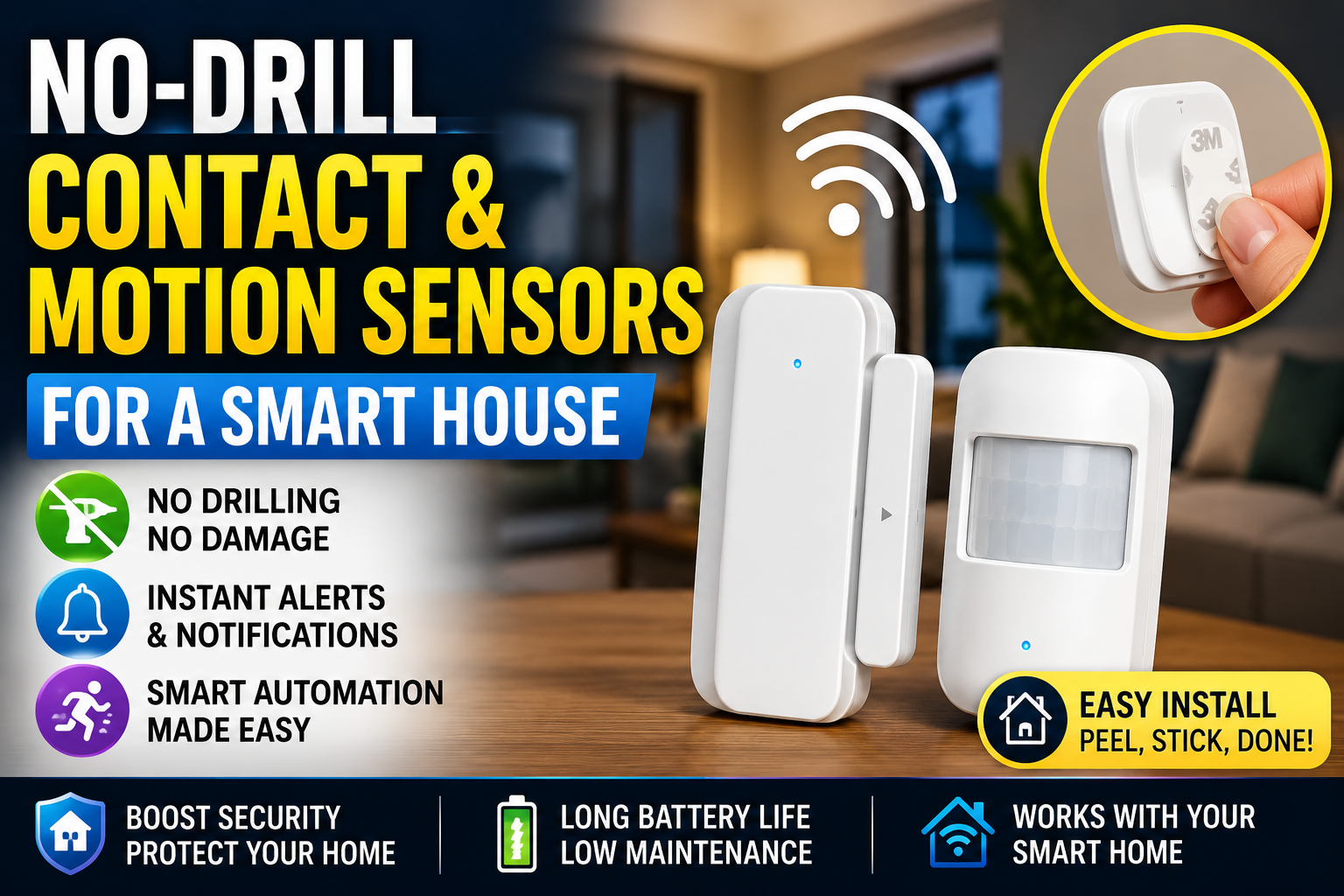
- Understanding Contact Sensors
- Understanding Motion Sensors
- Why Wireless Sensors Are Perfect for Smart Homes
- Installation Without Drilling
- Security Benefits of Contact Sensors
- Motion Sensors and Everyday Automation
- Combining Contact and Motion Sensors
- Practical Example: A Rental Apartment Setup
- Battery Life and Maintenance
- Privacy Considerations
- Choosing the Right Sensors
- The Future of No-Drill Smart Home Sensors
- Conclusion
Among these devices, no-drill contact sensors and motion sensors have become increasingly popular. They offer homeowners, renters, apartment dwellers, and even temporary residents the ability to enhance security and automate daily routines without damaging walls, doors, or window frames.
Whether you’re looking to receive alerts when a door opens, automate lighting based on movement, monitor restricted areas, or simply make your smart home more responsive, modern wireless sensors provide an affordable and flexible solution.
In this guide, we’ll explore how no-drill contact and motion sensors work, their benefits, installation methods, practical use cases, privacy considerations, and how they fit into the evolving world of smart home automation.
Why No-Drill Installation Has Become So Popular
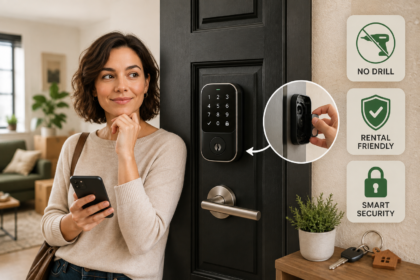
Not everyone owns the property where they live.
Millions of people live in:
- Apartments
- Rental homes
- Student housing
- Shared accommodations
- Temporary residences
In many situations, drilling holes into walls or door frames is either prohibited or undesirable.
Even homeowners often prefer non-invasive solutions because they:
- Reduce installation time
- Avoid cosmetic damage
- Simplify relocation
- Eliminate the need for tools
- Make upgrades easier
As smart home technology becomes more mainstream, manufacturers have increasingly focused on products that offer professional-looking results without requiring permanent modifications.
Understanding Contact Sensors
Contact sensors are among the simplest yet most versatile smart home devices.
At their core, they detect whether two components are physically aligned or separated.
Typically, a contact sensor consists of:
- A sensor module
- A small magnetic piece
When both pieces remain close together, the system recognizes the door or window as closed.
When they separate, the sensor detects an opening event.
Common Locations for Contact Sensors
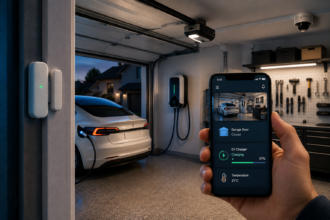
Contact sensors are frequently installed on:
- Front doors
- Back doors
- Patio doors
- Windows
- Cabinets
- Drawers
- Mailboxes
- Storage rooms
Because modern models are compact and lightweight, they can often be mounted using adhesive strips rather than screws.
This makes them ideal for no-drill installations.
Understanding Motion Sensors
While contact sensors monitor openings and closures, motion sensors detect activity within a space.
These devices typically use passive infrared (PIR) technology to identify changes in heat patterns caused by movement.
When someone enters the monitored area, the sensor can trigger actions or notifications.
Common Uses for Motion Sensors
Motion sensors are often installed in:
- Hallways
- Entryways
- Living rooms
- Garages
- Basements
- Staircases
- Home offices
Many homeowners combine motion sensors with smart lighting to create hands-free automation throughout the home.
Why Wireless Sensors Are Perfect for Smart Homes
Wireless connectivity has transformed sensor technology.
Traditional security systems often required extensive wiring and professional installation.
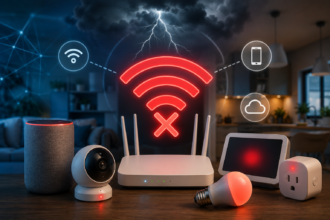
Modern wireless sensors communicate using technologies such as:
- Wi-Fi
- Zigbee
- Z-Wave
- Matter-compatible networks
- Bluetooth
This flexibility allows homeowners to place sensors almost anywhere without worrying about running cables through walls.
The result is a cleaner, simpler installation process.
Installation Without Drilling
One of the primary advantages of modern sensors is their ease of installation.
Adhesive Mounting Systems
Most no-drill sensors include:
- Double-sided adhesive strips
- Peel-and-stick pads
- Repositionable mounting tape
Installation often takes less than five minutes.
The process usually involves:
- Cleaning the surface.
- Removing the adhesive backing.
- Positioning the sensor.
- Pairing it with the smart home platform.
No special tools are required.
Magnetic Mounts
Some premium sensors use magnetic mounting systems.
These designs allow users to remove sensors easily for battery replacement or repositioning without affecting the adhesive base.
This approach is especially convenient for renters who may need to relocate devices later.
Removable Mounting Options
Modern adhesive technologies have improved significantly.
Many products can be removed cleanly without leaving visible marks or residue.
This feature is particularly valuable in rental properties where maintaining walls and surfaces is important.
Security Benefits of Contact Sensors
Although contact sensors appear simple, they provide valuable security capabilities.
Instant Entry Notifications
Homeowners receive immediate alerts when doors or windows are opened unexpectedly.
This feature is useful whether you’re:
- At work
- Traveling
- Sleeping
- In another room
Knowing exactly when an entry point is accessed improves awareness and security.
Monitoring Vulnerable Areas
Certain areas of a home are naturally more vulnerable.
Examples include:
- Ground-floor windows
- Side entrances
- Garage access doors
- Basement entrances
Strategically placed sensors provide additional visibility into these locations.
Family Awareness
Security isn’t always about intruders.
Many families use contact sensors to monitor:
- Children’s rooms
- Medicine cabinets
- Storage areas
- Pool access gates
The same technology can support both safety and convenience.
Motion Sensors and Everyday Automation
Motion sensors often become some of the most frequently used devices in a smart home.
Lighting Automation
One of the most popular applications is automatic lighting control.
For example:
A hallway light can activate automatically when movement is detected and turn off after a few minutes of inactivity.
This improves convenience while reducing energy waste.
Nighttime Navigation
Motion-triggered lighting is especially useful during nighttime hours.
Instead of searching for switches in the dark, lights can activate automatically at a low brightness level.
This creates a more comfortable environment while minimizing disruptions.
Energy Efficiency
Many rooms remain unoccupied for extended periods.
Motion sensors help reduce unnecessary energy consumption by ensuring lights and devices operate only when needed.
Combining Contact and Motion Sensors
The true power of smart home sensors emerges when they work together.
Smarter Security Scenarios
Imagine the following sequence:
A contact sensor detects a door opening.
A nearby motion sensor then detects movement.
The system can automatically:
- Send a notification
- Start camera recording
- Turn on lights
- Trigger an alarm
This layered approach improves accuracy and reduces false alerts.
Enhanced Home Automation
Combined sensors also enable sophisticated routines.
For example:
Opening the front door after sunset can trigger:
- Hallway lights
- Climate adjustments
- Smart speaker announcements
The home responds intelligently to real-world activity.
Practical Example: A Rental Apartment Setup
Consider a renter living in a two-bedroom apartment.
Because drilling is prohibited, installing traditional security equipment would be difficult.
Instead, the tenant installs:
- Contact sensors on the front door and balcony door
- Motion sensors in the hallway and living room
- Smart lighting integrated with motion detection
The entire system is installed in under an hour without damaging any surfaces.
When the renter eventually moves, every device can be removed and taken to the next residence.
This flexibility demonstrates why no-drill smart home devices have become so popular.
Battery Life and Maintenance
One concern often raised about wireless sensors is battery life.
Fortunately, modern sensors are remarkably efficient.
Many models can operate for:
- One year
- Two years
- Three years
- Sometimes even longer
Battery longevity depends on:
- Sensor type
- Usage frequency
- Wireless protocol
- Environmental conditions
Most systems provide low-battery notifications long before replacement becomes necessary.
Simple Maintenance
Maintenance requirements are minimal.
Typically, homeowners only need to:
- Replace batteries periodically
- Check adhesive integrity
- Update firmware when available
This low-maintenance design contributes to the popularity of wireless sensors.
Privacy Considerations
Unlike cameras and microphones, contact and motion sensors collect relatively limited information.
This naturally reduces many privacy concerns.
However, users should still consider:
- Data storage policies
- Cloud connectivity
- Account security
- Device encryption
Selecting reputable manufacturers and using strong account protection practices helps maintain privacy.
Local Processing Trends
An increasing number of smart home platforms are moving toward local processing.
This allows sensor data to remain within the home network rather than relying heavily on cloud services.
For privacy-conscious users, this development is particularly encouraging.
Choosing the Right Sensors
Not all sensors are equally suited to every environment.
For Renters
Key priorities often include:
- Strong adhesive mounting
- Easy removal
- Compact design
- Long battery life
For Larger Homes
Coverage and wireless range become more important.
Homeowners should ensure sensors communicate reliably throughout the property.
For Automation Enthusiasts
Integration capabilities may be the deciding factor.
Advanced users often prioritize compatibility with:
- Smart lighting
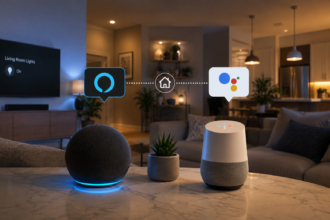
- Voice assistants
- Automation hubs
- Matter ecosystems
The ideal sensor depends on the broader goals of the smart home.
The Future of No-Drill Smart Home Sensors
Sensor technology continues to evolve rapidly.
Future developments are likely to include:
- Smaller form factors
- Longer battery life
- Enhanced AI capabilities
- Improved occupancy detection
- Greater Matter compatibility
- More advanced automation features
As smart homes become more intelligent, sensors will increasingly serve as the foundation that enables devices to respond intelligently to human activity.
Rather than merely detecting movement or door openings, future systems will better understand context and intent.
Conclusion
No-drill contact and motion sensors have transformed the way homeowners and renters approach smart home security and automation. By eliminating the need for permanent modifications, these devices make smart home technology more accessible, flexible, and practical than ever before.
Whether you’re securing entry points, automating lighting, improving energy efficiency, or building a more responsive smart home environment, modern wireless sensors provide powerful functionality in an incredibly simple package. Their ease of installation, long battery life, and compatibility with modern smart home ecosystems make them one of the most valuable investments for anyone looking to enhance their living space.
As smart home technology continues to advance, no-drill sensors will remain a key component of intelligent homes, proving that sometimes the smallest devices can have the biggest impact.
Hi,
I checked your website and found a few SEO improvements that can help increase your Google rankings and generate more quality leads.
I can share a quick SEO proposal with pricing and a strategy tailored for your business growth.
Let me know if you’re interested.
Regards,
David