


There’s something quietly frustrating about buying a tech gift that ends up in a drawer six weeks later. A smart plug still in its box. A voice assistant that never got set up. A smart bulb that required an app nobody bothered to download. We’ve all been on one side of that exchange — either the giver who meant well, or the receiver who smiled politely and then forgot about it entirely.
The problem isn’t the technology itself. Smart home devices have genuinely gotten better, cheaper, and easier to set up in the last few years. The problem is that most people buy the wrong thing for the wrong person. They default to whatever is trending on Amazon or whatever showed up in a “best gifts for tech lovers” roundup that was probably written by someone who hasn’t actually touched the device.
This guide is different. It’s built around one question: which smart home devices are people most likely to actually install, use every day, and quietly become dependent on? Not the flashiest options. Not the most expensive. The ones that earn a permanent spot in someone’s home.
Why Smart Home Gifts Usually Fail
Before getting into the specific recommendations, it’s worth spending a moment on why this category has such a high “gift graveyard” rate.
The biggest culprit is complexity. A lot of smart home products are genuinely impressive on paper but require a hub, a specific router setup, a compatible voice assistant, or some combination of all three before they do anything useful. When you give that to someone who doesn’t already have a smart home ecosystem, you’re not giving them a gift — you’re giving them homework.
The second problem is relevance. Gifting a smart thermostat to someone who rents their apartment and can’t change the wiring isn’t thoughtful, it’s wasteful. A smart lock is useless if someone lives in a building with keycard access. Context matters enormously here.
The third is setup friction. Even genuinely simple devices get abandoned if the first-time setup experience is confusing or tedious. The best smart home gifts are the ones where the recipient can go from box to working device in under ten minutes, preferably without needing to read a manual.
Keep these three filters in mind — complexity, relevance, and setup friction — and the field narrows considerably.
The Devices That Make Great Smart Home Gifts
Smart Plugs: The Underrated Gateway Device
If you’re only going to gift one smart home device and you don’t know much about the recipient’s existing setup, a smart plug is almost always the right call. It’s small, it’s cheap (typically between $10 and $25 depending on the brand), and it works with literally any device that plugs into a wall.
The reason smart plugs consistently earn permanent spots in people’s homes is that they solve real, everyday frustrations. The lamp that’s always on when you leave the house. The coffee maker you forgot to turn off. The space heater that could theoretically burn the place down if left running. Plug in a smart plug, connect it to the app (usually a five-minute process), and suddenly you can check and control those devices from anywhere.
Brands like TP-Link Kasa, Amazon Smart Plug, and Meross all make reliable options that pair with both Alexa and Google Home. If the person you’re buying for doesn’t have either of those, the app-only experience still works perfectly well. That’s the flexibility that makes this category so gift-friendly.
One tip: if the recipient has a specific voice assistant, double-check compatibility. Most modern plugs support both Alexa and Google Home, but Apple HomeKit compatibility is a separate consideration. Meross has solid HomeKit support if that’s relevant.
Smart Bulbs: The Easiest Upgrade to Any Room
Smart bulbs are another category where the use case is immediately obvious to almost anyone. You screw them in where regular bulbs already are, download an app, and you’re done. No electrician, no hub required in most cases, no drilling.
The gift potential here depends on who you’re buying for, though. Someone who’s color-obsessive or works from home will probably love a set of Philips Hue or LIFX bulbs that let them dial in different moods throughout the day — warm white for evenings, cooler tones for focus, a soft orange for late-night reading. Someone who’s more practical will care mostly about being able to schedule lights on and off and maybe turn them on remotely when they’re traveling.
The Govee smart bulbs hit a sweet spot of price and feature set that makes them a good default for most people. At around $8–12 per bulb, you can gift a two- or four-pack without breaking the budget. For someone who’s more invested in their home aesthetic, a Philips Hue starter kit (which includes bulbs and the required bridge) is a more considered gift that telegraphs actual thought.
One thing to avoid: gifting smart bulbs to someone who uses dimmer switches without checking compatibility first. Dimmers and smart bulbs don’t play well together, and the flickering or buzzing that results tends to sour people on smart lighting permanently.
Smart Speakers and Displays: The Hub Everyone Actually Uses
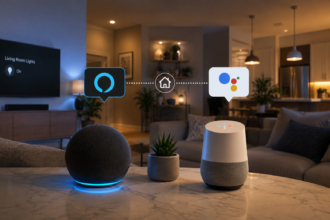
The Amazon Echo Dot and Google Nest Mini have been go-to gifts for years, and for good reason — they’re useful from the moment they come out of the box, they’re well under $50, and they serve as a soft entry point to broader smart home control.
What’s changed recently is that these devices have gotten genuinely smarter in ways that matter. Voice recognition has improved. Multi-room audio setups are easier to configure. And smart display versions — the Echo Show 5 or Google Nest Hub — add a visual layer that makes things like checking a recipe, seeing who’s at the door, or glancing at your calendar feel actually intuitive rather than just technically possible.
The one consideration when gifting these: find out if the person already has a preference for Amazon or Google before you buy. These ecosystems don’t mix well, and locking someone into the wrong one is frustrating. If you genuinely don’t know, the Amazon Echo Dot is the safer bet purely because Alexa has broader third-party device support at the moment — though that gap has narrowed.
Smart Doorbells: A Gift That Changes Daily Behavior
Video doorbells occupy an interesting category: they’re a bit more expensive than plugs or bulbs, they require a small amount of installation, but the behavioral shift they create is immediate and noticeable. The first time someone’s phone buzzes to show them a package was just delivered, or they see a delivery driver at the door while sitting in their office, the value proposition becomes obvious.
The Ring Video Doorbell (particularly the second-generation wired version) and the Google Nest Doorbell both sit in the $100–180 range, which makes them a realistic option for anyone looking to spend a bit more on a thoughtful gift. The battery-powered versions remove the installation barrier almost entirely — no wiring, just mounting and charging.
This is a gift that works best for homeowners rather than renters, simply because mounting and permissions can be complicated in apartments. For a homeowner, though, it’s one of the highest-value smart home upgrades you can make without involving a contractor.
Smart Thermostats: A Bigger Commitment With Real Returns
A smart thermostat sits at the more premium end of this gift guide, both in price ($120–250 depending on the model) and in installation complexity. The ecobee SmartThermostat Premium and Google Nest Thermostat are both genuinely excellent products that most people who receive them end up loving — but the gift context matters here more than anywhere else.
This is a homeowner-only gift. It’s also a gift that requires a few minutes of wiring work, which some people are comfortable with and others aren’t. The Google Nest app guides you through the installation step by step, and most modern homes have compatible wiring, but it’s not as plug-and-play as everything else on this list.
When the context is right, though, a smart thermostat is one of those gifts that pays for itself within a year through energy savings, and that’s something recipients actually notice and mention. It’s a gift that keeps showing up in the person’s life every single day, which is the best version of any present.
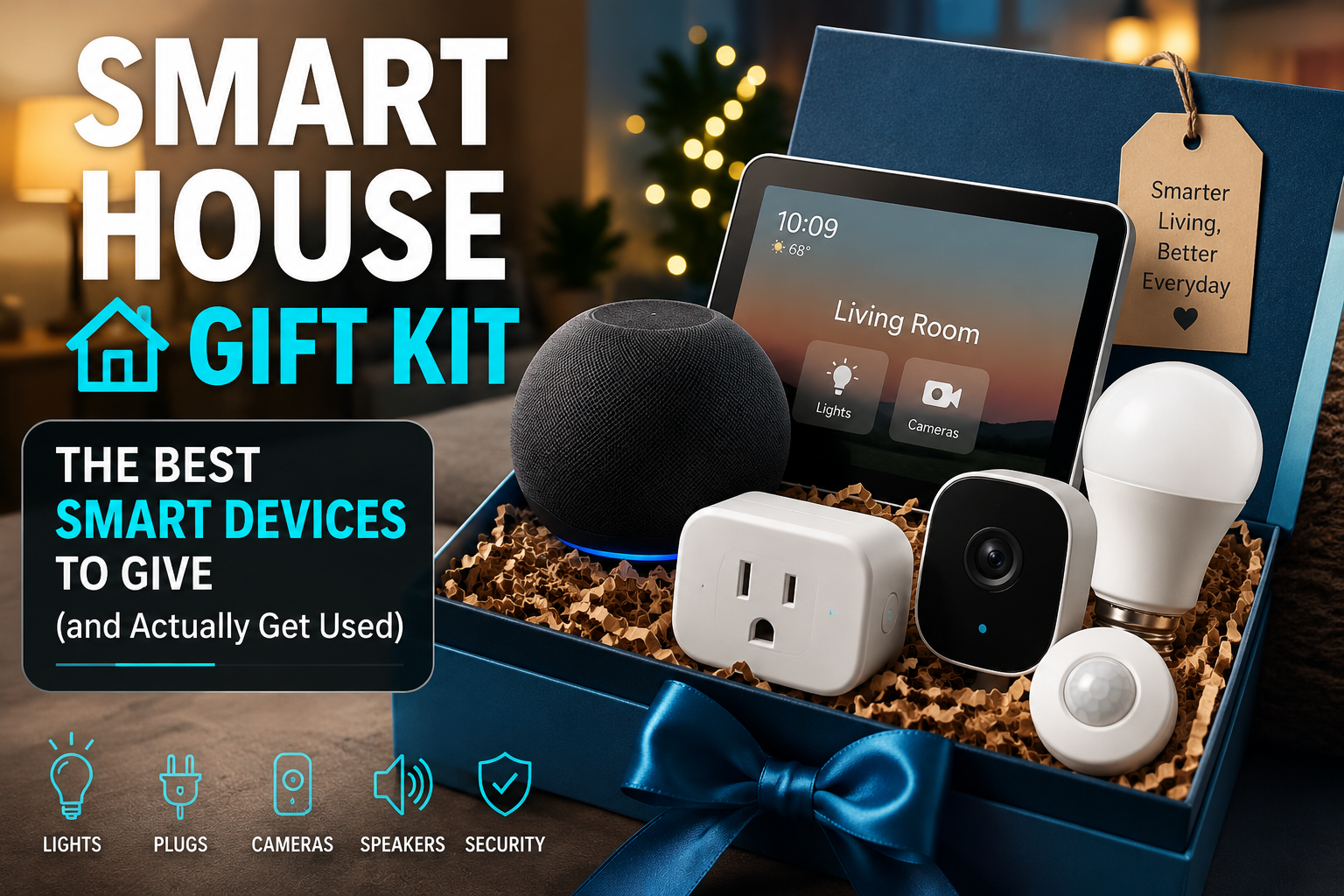
How to Build an Actual Smart House Gift Kit
If you want to go beyond a single device and put together a proper curated kit, the key is coherence. Devices that work together are more valuable than a random collection of individual things.
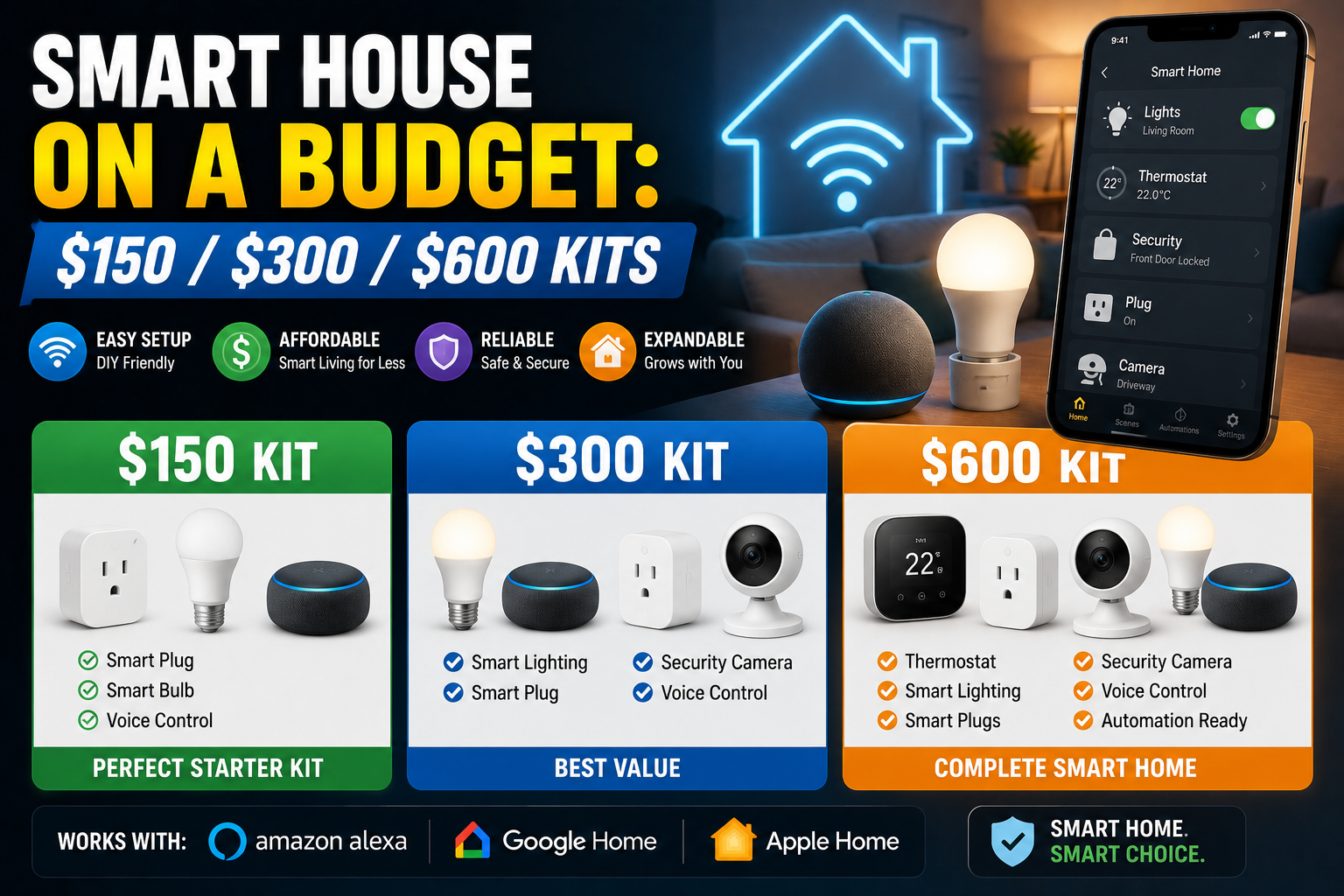
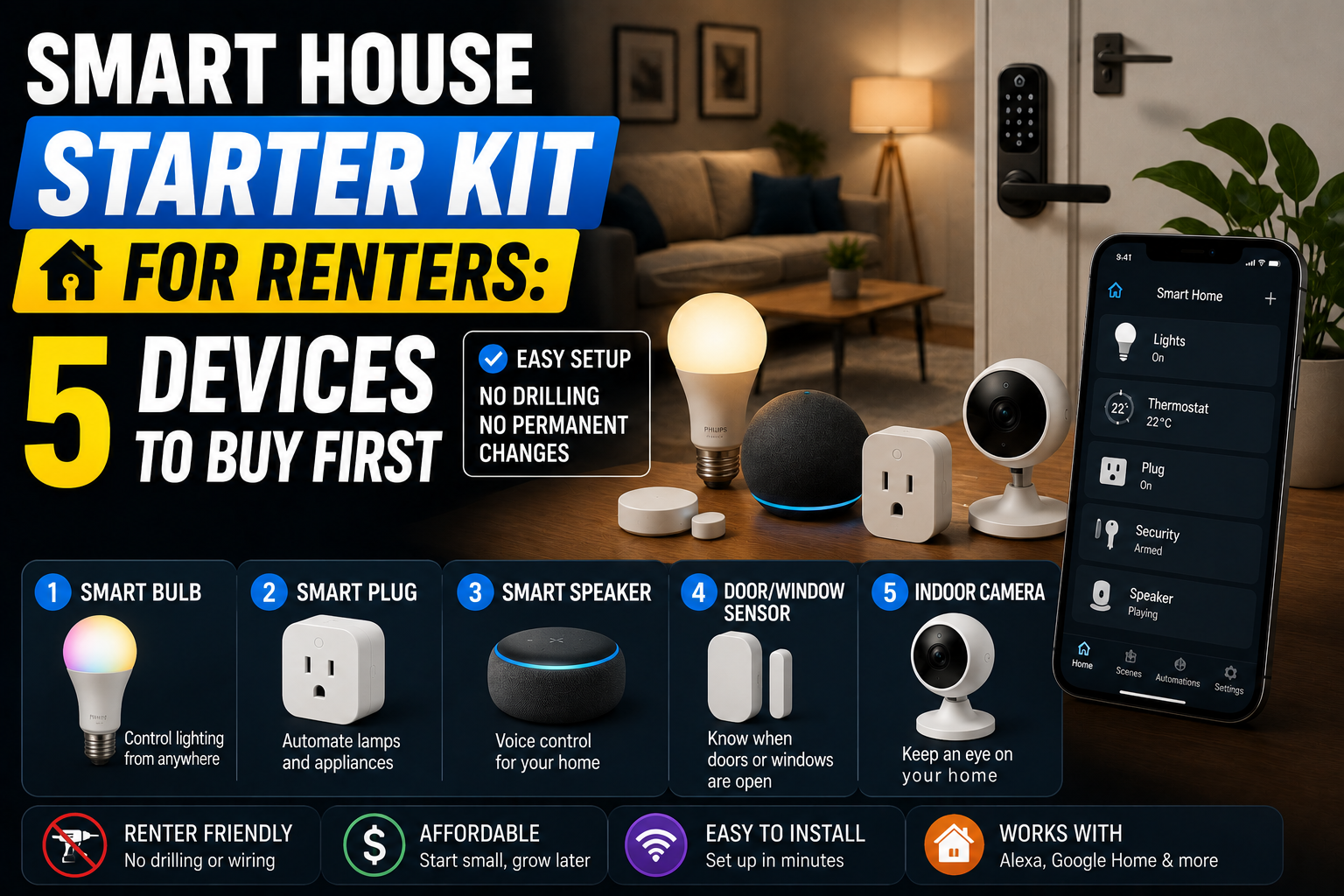
A practical starter kit at the $75–100 range: a two-pack of smart plugs and a four-pack of smart bulbs from compatible brands. Add a simple smart speaker if you have budget for it. That’s a self-contained ecosystem that someone can set up in an afternoon and start using immediately.
For $150–200, you can build something more intentional: a smart display like the Echo Show 5, two smart plugs, and a starter pack of color-capable bulbs. That combination covers ambient control, voice interaction, and automation in a way that feels like an actual system rather than a collection of gadgets.
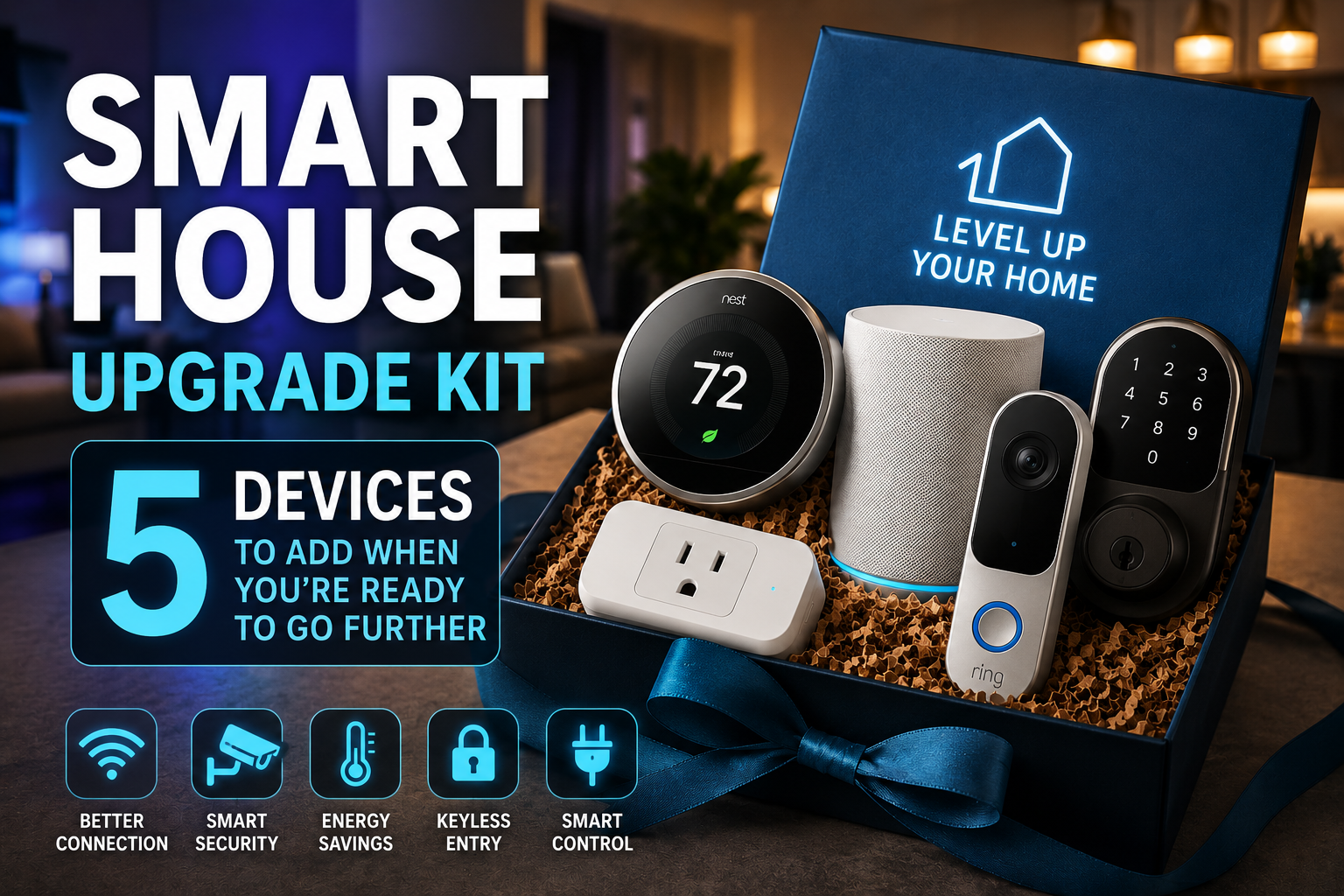
At the $250–350 level, swapping in a video doorbell or a smart thermostat alongside a few supporting devices makes for a genuinely memorable gift — the kind that someone brings up months later because it changed something real about how their home works.
A Note on Compatibility Before You Buy
The one due-diligence step that’s worth taking before finalizing any smart home gift: check the recipient’s existing setup. If they already have an Echo on their kitchen counter, lean into Amazon compatibility. If their phone is an iPhone and they mention HomeKit occasionally, prioritize devices with that certification. The Matter standard is gradually making cross-platform compatibility less of an issue, but it’s not universal yet.
Getting this right is the difference between a gift that slots seamlessly into someone’s life and one that creates friction because it uses a different app than everything else they own.
Conclusion
The best smart home gifts aren’t the most feature-packed or the most expensive — they’re the ones that match the person’s context, remove friction rather than creating it, and deliver obvious value from the first day of use. Smart plugs work for nearly everyone. Bulbs are easy and flexible. A voice assistant anchors the whole system. A doorbell or thermostat makes for a more significant gift when the situation calls for it.
Build your kit around those principles, check compatibility once before buying, and you’ll be firmly in the category of gifts that actually get used — not the category that gets quietly returned in January.