





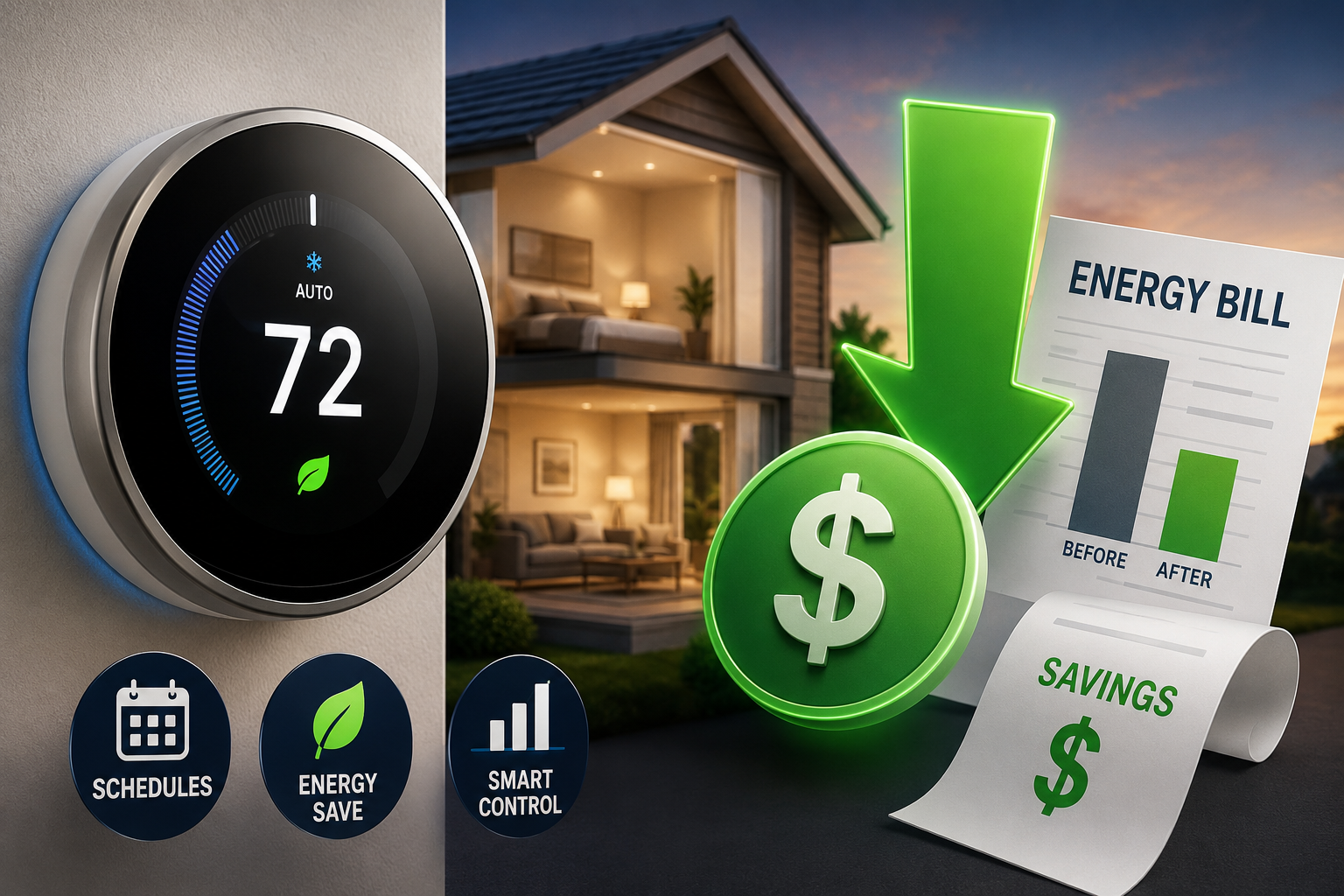
Heating and cooling is the single biggest line item on most home energy bills, which is exactly why a smart thermostat is usually the first upgrade people consider when they start paying attention to what their home actually costs to run. The marketing promises are bold, and the real numbers are more modest and more specific than most of it suggests.
A smart thermostat does not lower your bill by existing. It lowers your bill by changing when and how your system runs, and how much that’s worth depends heavily on your climate, your home, and your habits before you installed it. This guide breaks down exactly where the savings come from, what actually moves the needle, and how to confirm the device is working rather than just trusting the app’s estimate.
Why Heating and Cooling Dominates Your Bill
Before looking at what a smart thermostat changes, it helps to understand why the thermostat is the highest-leverage device in the house to begin with. Heating, ventilation, and air conditioning typically account for the largest single share of a home’s total energy use, well ahead of lighting, electronics, or appliances individually. That’s true whether you’re in a climate that leans heavily on heating, cooling, or both across the year.
This is also the reason a smart thermostat tends to deliver more noticeable savings than a smart plug on a single appliance. You’re not optimizing one device pulling a small, steady load — you’re optimizing the system responsible for the largest and most variable draw in the house. If you’ve already started measuring your AC usage in a smart house, you’ve likely already seen firsthand just how large that share actually is on a hot month’s bill.
How Smart Thermostats Actually Save Energy
Automatic Scheduling Based on Occupancy
The most basic mechanism is also the most reliable one: running your system less when nobody needs the temperature held tightly. A programmable schedule that eases off overnight or during work hours, then ramps back up before you’re home, avoids paying to condition an empty house at the same intensity as an occupied one. This isn’t unique to “smart” thermostats specifically — basic programmable models have offered scheduling for years — but smart models make it dramatically easier to actually set up and, critically, easier to adjust without giving up and leaving it on a flat setting out of frustration.
Geofencing and Away Detection
Smart thermostats add a layer that manual schedules can’t replicate: knowing when you’ve actually left, rather than assuming you left based on a fixed clock. Using your phone’s location or a household occupancy sensor, the thermostat can ease off automatically when everyone’s out and recover before anyone gets back, even if your schedule that day was irregular. This matters most for households with unpredictable routines, where a rigid schedule would either waste energy on days you left early or leave you walking into an uncomfortable house on days you came home late.
Learning Your Patterns Over Time
Several smart thermostats build a model of your routine from how you actually adjust the temperature over the first few weeks, rather than requiring you to program a schedule manually at all. The savings case here is less about any single clever adjustment and more about removing the friction that causes most programmable thermostats to end up ignored on a static setting. A thermostat that adapts on its own is one you’re less likely to override into inefficiency.
Weather-Aware Adjustments
The more sophisticated models factor in outdoor weather and forecast data, pre-cooling or pre-heating before a temperature swing, or easing back when outdoor conditions mean the target temperature will hold with less work. This is a smaller effect than scheduling or away detection for most households, but it compounds over a full season, particularly in climates with large day-to-night temperature swings.
What Actually Determines Your Savings
Your Climate
The size of your potential savings tracks closely with how much your system runs in the first place. A home in a mild climate with moderate heating and cooling needs has less to save than a home running air conditioning most of the summer or heating most of the winter. This is the single biggest factor in why savings estimates vary so widely between households — the underlying baseline usage is completely different.
Your Home’s Insulation and Size
A smart thermostat manages when your system runs; it doesn’t fix how quickly a poorly insulated home loses conditioned air. In a leaky or under-insulated home, the system has to work harder to recover after an eased-off period, which eats into the savings from scheduling. If your home has known insulation issues, addressing those delivers savings that compound with, rather than compete with, whatever a smart thermostat adds on top.
Your Habits Before the Upgrade
This is the factor most reviews leave out. If you were already diligent about manually adjusting your thermostat when you left the house and before bed, a smart thermostat mostly automates a habit you’d already built, and the marginal savings will be modest. If you were running a flat, unadjusted setting around the clock because manual scheduling felt like a hassle, the same device can produce a genuinely large drop, simply because it’s doing something that wasn’t happening before at all.
Your Electricity Rate Plan
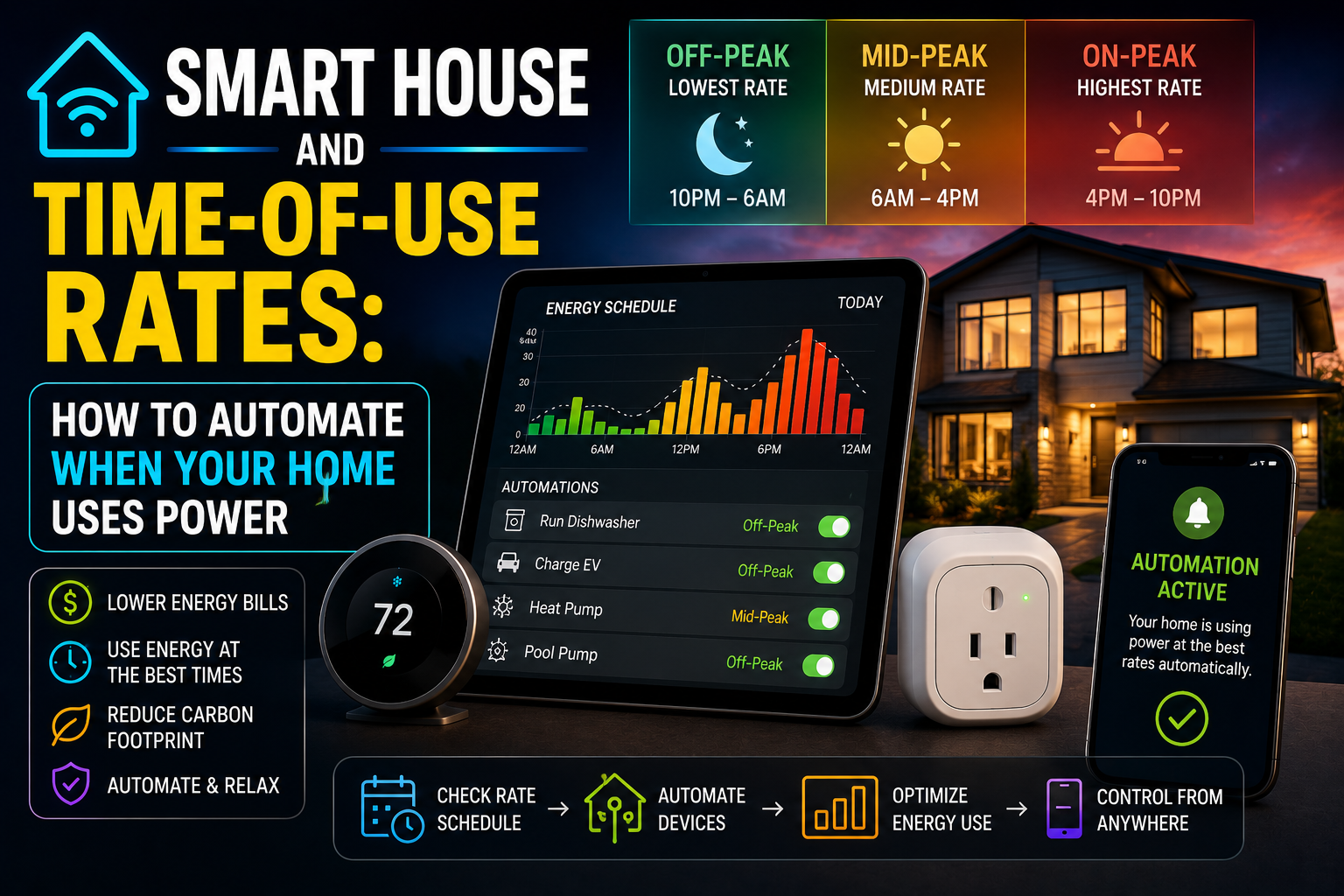
If your utility offers time-of-use pricing, a smart thermostat’s value extends beyond raw energy reduction into shifting when that energy is used. Pre-cooling or pre-heating during cheaper off-peak hours, then coasting through the expensive peak window, can meaningfully lower your bill even without changing total consumption. This pairs directly with the strategy covered in our guide to automating your home around time-of-use electricity rates, and it’s worth checking your plan before assuming a flat percentage savings applies to you.
Getting the Most Out of the Upgrade
A smart thermostat installed with default settings and never touched again captures only part of the available savings. Spend the first two weeks actually reviewing the schedule it builds or that you set, and correct anything that looks wrong rather than assuming the defaults fit your household. Set genuinely different setpoints for away and sleep periods rather than a narrow range that barely changes system behavior — a small setback saves little, while a meaningful one adds up.
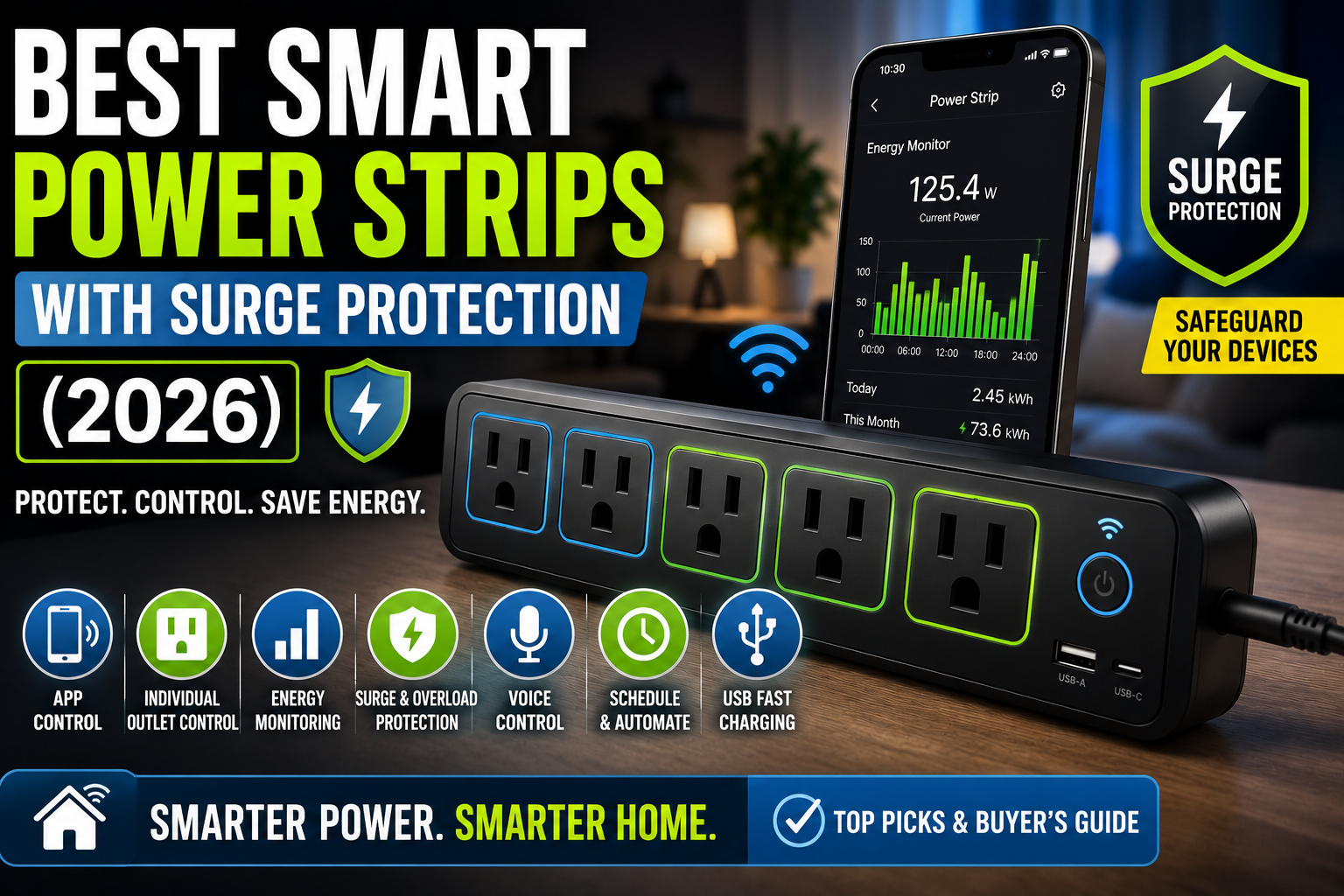
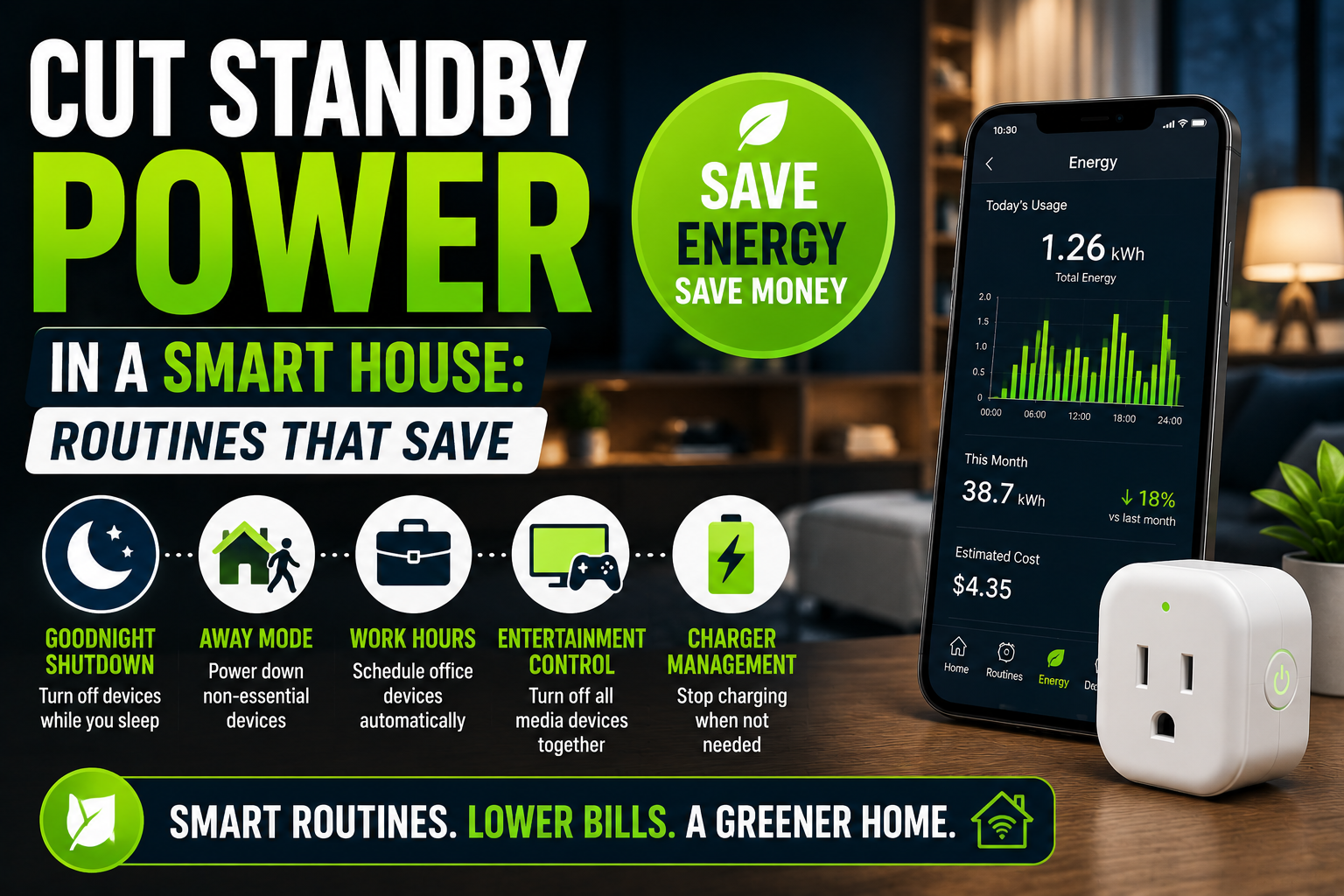
It’s also worth treating the thermostat as one piece of a broader energy picture rather than a standalone fix. A thermostat that’s cutting your HVAC use while other devices in the house sit drawing standby power around the clock is only addressing part of the bill. Pairing it with the routines in our guide to cutting standby power in a smart house, or protecting the electronics behind it with a surge-protected smart power strip, addresses the rest of the load the thermostat was never going to touch.
Verifying the Savings Are Real
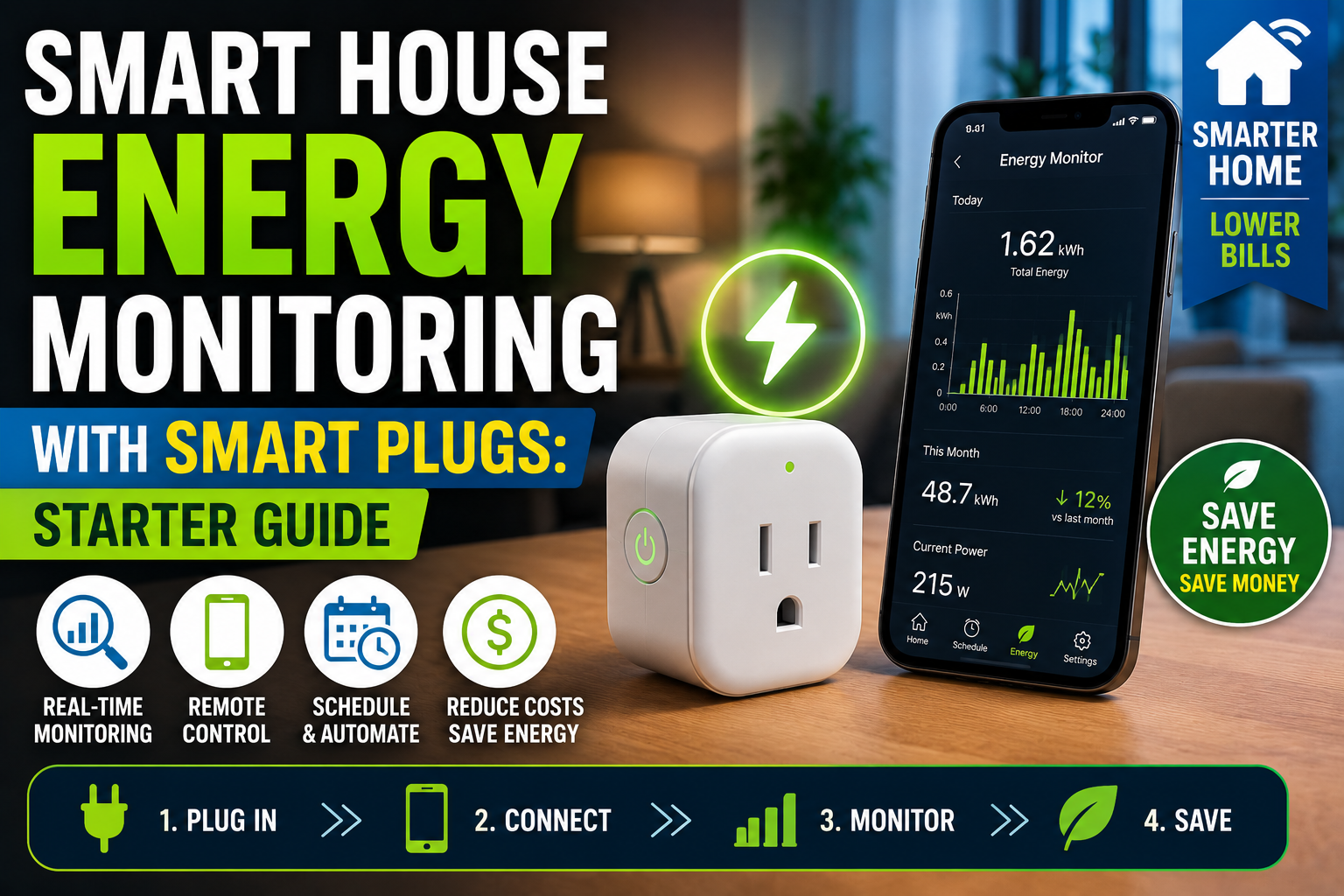
The honest way to know whether a smart thermostat is actually saving you money, rather than just trusting an app’s built-in estimate, is to measure it independently. If you’ve already set up energy monitoring with smart plugs elsewhere in your home, or you’re deciding what kind of monitor to add next, this is exactly the kind of before-and-after comparison that monitoring is built for: track your usage for a couple of weeks before the change and a comparable couple of weeks after, ideally across similar outdoor temperatures, and compare the actual numbers rather than a percentage claim from a product page.
This is also the point where it’s worth revisiting whether a smart plug’s monitoring is really moving the needle on your bill compared to the much larger swing a thermostat produces — the two devices are solving different-sized problems, and knowing that helps you set realistic expectations for either one.
The Bottom Line
A smart thermostat’s savings come from four specific mechanisms — occupancy-based scheduling, geofencing, pattern learning, and weather-aware adjustments — and how much any of them are worth to you depends on your climate, your home’s insulation, your habits before the upgrade, and whether you’re on a time-of-use rate plan. Households replacing a genuinely unmanaged, flat setting tend to see the largest gains; households that were already disciplined about manual adjustments will see a smaller, still real, improvement. Set it up properly, review the schedule it builds instead of leaving it on default, and verify the result with real before-and-after data rather than taking a marketing percentage at face value.
Frequently Asked Questions
How much can a smart thermostat actually save on a typical bill?
It depends far more on your starting habits and climate than on the device itself. Households moving from a flat, unadjusted setting to proper scheduling tend to see the largest improvement, while households that were already manually adjusting the temperature see a smaller gain, since the thermostat is mostly automating something they were already doing.
Do I need a whole smart home setup for a smart thermostat to be worth it?
No. A smart thermostat works as a standalone upgrade and delivers its core savings — scheduling and away detection — without any other smart home devices. Pairing it with energy monitoring elsewhere in the house simply lets you verify the actual savings rather than guess at them.
Will a smart thermostat fix a poorly insulated home?
No. It changes when and how hard your system runs, but it can’t stop conditioned air from escaping through poor insulation. In a leaky home, the system still has to work harder to recover from eased-off periods, which reduces how much the thermostat alone can save until the insulation itself is addressed.
Is geofencing actually more effective than a fixed schedule?
For households with irregular routines, yes, because it responds to when you actually leave and return rather than a fixed clock that’s wrong on inconsistent days. For households with a very stable daily routine, a well-set fixed schedule can perform nearly as well, since there’s little irregularity for geofencing to correct for.
How do I know if my smart thermostat is actually saving me money?
Compare real usage data from before and after installation, ideally over similar outdoor temperatures, rather than relying on the app’s built-in savings estimate. If you’re already tracking usage with energy-monitoring devices elsewhere in your home, apply the same before-and-after comparison to your HVAC system specifically.
Is a smart thermostat worth it if I’m on a flat electricity rate rather than time-of-use pricing?
Yes, though the value comes entirely from reduced overall usage rather than shifted usage. On a time-of-use plan, a smart thermostat can additionally shift consumption toward cheaper hours, which adds a second layer of savings on top of simply running the system less.