




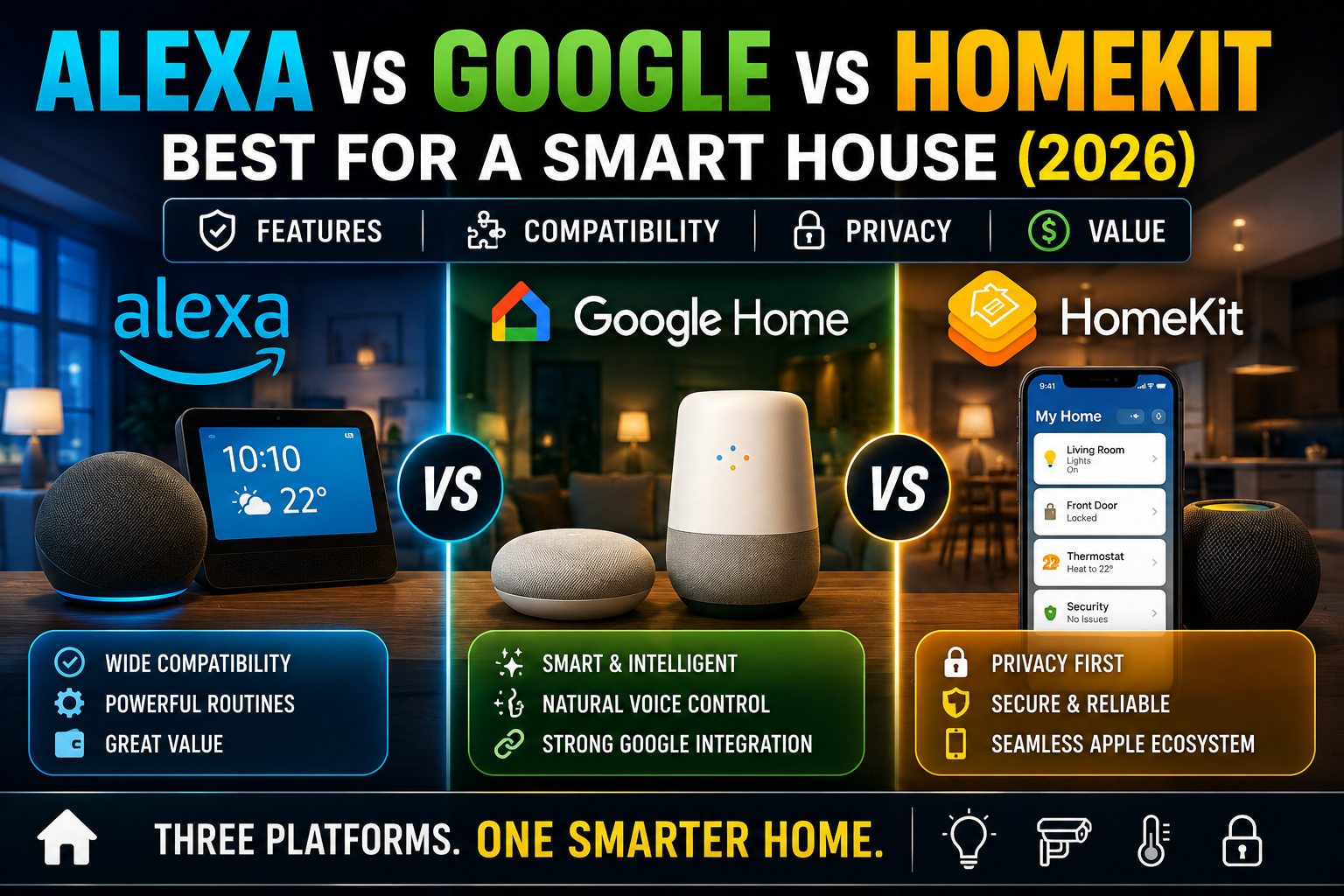
Building a smart home in 2026 is easier than ever. Smart bulbs, cameras, thermostats, door locks, sensors, speakers, and appliances are now widely available and more affordable than they were just a few years ago. Yet despite the rapid growth of smart home technology, one question continues to challenge both newcomers and experienced enthusiasts:
- Why the Smart Home Ecosystem Matters
- Amazon Alexa: The Smart Home Giant
- Google Home: Intelligence and Natural Language
- Apple HomeKit: Privacy and Premium Integration
- The Impact of Matter in 2026
- Real-World Examples
- Which Platform Is Best for Automation?
- Voice Control Comparison
- Security and Privacy Comparison
- The Future of Smart Home Ecosystems
- Conclusion
Which ecosystem should you choose?
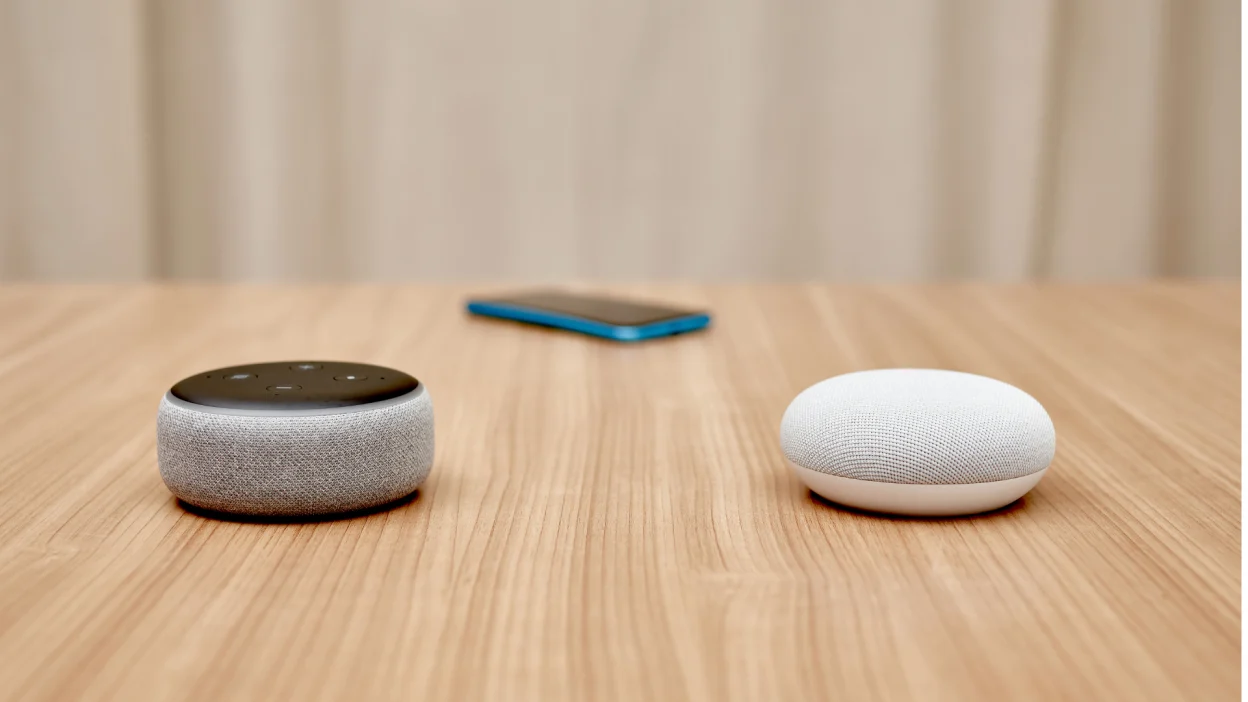
For most homeowners, the decision comes down to three major platforms: Amazon Alexa, Google Home, and Apple HomeKit. Each ecosystem promises seamless automation, voice control, device integration, and a connected living experience. However, the reality is that they differ significantly in philosophy, compatibility, privacy, ease of use, and long-term flexibility.
Choosing the right platform can influence every future smart home purchase. While switching ecosystems is possible, it can become expensive and inconvenient once dozens of devices are connected.
The good news is that there is no universally perfect option. The best choice depends on your priorities, the devices you already own, and how you plan to use your smart home in the coming years.
In this guide, we’ll take an in-depth look at Alexa, Google Home, and Apple HomeKit, comparing their strengths, weaknesses, and ideal use cases to help you determine which platform is best for your smart house in 2026.
Why the Smart Home Ecosystem Matters
Many people begin their smart home journey by purchasing individual devices without considering the ecosystem behind them.
A smart speaker here.
A smart bulb there.
A video doorbell a few weeks later.
Eventually, they discover that some products work better together than others.
The ecosystem acts as the central nervous system of the smart house. It determines how devices communicate, how automations are created, and how easy it is to manage everything from a single interface.
The stronger the ecosystem, the more cohesive the overall experience becomes.
Amazon Alexa: The Smart Home Giant
Amazon helped popularize voice-controlled smart homes through its Echo product lineup. Over the years, Alexa has grown into one of the largest and most compatible smart home ecosystems available.
Alexa’s Biggest Strength: Device Compatibility
Compatibility remains Alexa’s greatest advantage.
Thousands of manufacturers support Alexa integration, including products across categories such as:
- Lighting
- Security cameras
- Smart locks
- Thermostats
- Sensors
- Smart plugs
- Appliances
- Entertainment systems
For homeowners who want maximum flexibility, Alexa is difficult to beat.
In many cases, if a smart device exists, there’s a good chance it works with Alexa.
Easy Automation Creation
Alexa routines have become increasingly powerful.
Users can automate actions based on:
- Time schedules
- Voice commands
- Device states
- Motion detection
- Sensor activity
- Location triggers
Creating automations generally requires little technical knowledge.
Even beginners can build useful routines within minutes.
Affordable Hardware
Amazon’s hardware lineup remains one of the most budget-friendly options.
Echo speakers and displays are available across multiple price points, making it easy to expand a smart home without a large investment.
Where Alexa Falls Short
Alexa’s openness can sometimes feel overwhelming.
Because it supports such a vast number of products, the user experience may vary depending on the manufacturer.
Privacy-conscious users also occasionally express concerns about cloud-based voice processing and data collection practices.
While Amazon has introduced additional privacy controls in recent years, privacy is not typically considered Alexa’s strongest selling point.
Google Home: Intelligence and Natural Language
Google entered the smart home market with a different approach.
Rather than focusing primarily on compatibility, Google emphasized artificial intelligence and natural language understanding.
This remains one of its biggest strengths in 2026.
Superior Conversational Voice Control
Many users find Google Assistant more natural during conversations.
Complex questions often produce better results because Google’s search expertise enhances the assistant’s ability to understand context.
For example:
Instead of memorizing specific commands, users can often speak naturally.
This creates a smoother interaction experience.
Strong Integration With Google Services
Google Home works particularly well for households already invested in:
- Gmail
- Google Calendar
- Google Maps
- Google Photos
- YouTube
- Android devices
The ecosystem feels highly connected when these services are used regularly.
Smart Home Dashboard Improvements
Recent updates have significantly improved Google’s smart home management capabilities.
The interface is cleaner, faster, and more automation-focused than earlier versions.
This has helped close the gap with competing platforms.
Google’s Challenges
While Google Home supports many devices, compatibility still tends to trail Alexa slightly.
Certain niche products may support Alexa but not Google Home.
Additionally, Google’s long history of discontinuing products occasionally creates uncertainty among some users regarding long-term support.
Although Google remains deeply committed to smart home technology, this perception continues to influence buying decisions.
Apple HomeKit: Privacy and Premium Integration
Apple approaches smart homes differently.
Rather than maximizing compatibility, Apple prioritizes security, privacy, and tightly integrated user experiences.
For Apple users, this strategy can be extremely appealing.
Privacy as a Core Feature
Privacy is arguably HomeKit’s strongest differentiator.
Apple emphasizes:
- End-to-end encryption
- Secure authentication
- Local processing where possible
- Strict developer requirements
For homeowners concerned about data collection, HomeKit often feels reassuring.
Exceptional Ecosystem Integration
For households already using:
- iPhones
- iPads
- Apple Watches
- Macs
- Apple TVs
HomeKit can provide an exceptionally polished experience.
Devices interact smoothly across Apple’s ecosystem with minimal configuration.
HomeKit Automation Quality
HomeKit automations have become increasingly sophisticated.
Users can create routines based on:
- Presence detection
- Time schedules
- Device states
- Environmental conditions
- Sensor triggers
The experience feels streamlined and highly reliable.
HomeKit’s Biggest Limitation
Compatibility remains HomeKit’s most significant weakness.
Although support has expanded considerably thanks to Matter, HomeKit still works with fewer devices than Alexa.
Some manufacturers prioritize Alexa and Google support first.
As a result, HomeKit users occasionally encounter a more limited selection of compatible products.
Higher Entry Costs
Apple’s ecosystem generally requires greater investment.
Home hubs, Apple devices, and premium-compatible accessories often cost more than alternatives.
For some homeowners, the additional expense is worthwhile.
For others, it can become a barrier.
The Impact of Matter in 2026
One of the biggest developments in recent years has been the growth of Matter.
Matter is a universal smart home standard designed to improve interoperability between devices and platforms.
Why Matter Changes the Conversation
Previously, choosing an ecosystem often locked users into a particular platform.
Matter has reduced this problem significantly.
Many modern devices now support:
- Alexa
- Google Home
- HomeKit
simultaneously.
This flexibility allows homeowners to mix ecosystems more easily than before.
Matter Is Helpful, Not Magical
While Matter improves compatibility, ecosystems still differ in:
- User experience
- Automation capabilities
- Voice assistants
- Privacy policies
Matter reduces friction but does not eliminate platform differences entirely.
Real-World Examples
Family Focused on Convenience
Imagine a family with multiple Android phones, Google calendars, and smart displays.
Google Home may provide the most natural integration because it connects seamlessly with their daily digital habits.
Privacy-Conscious Homeowner
A homeowner working remotely may prioritize privacy above all else.
HomeKit’s security-focused approach could be particularly attractive in this scenario.
Smart Home Enthusiast
Someone planning to install dozens of devices from multiple manufacturers may appreciate Alexa’s extensive compatibility and flexibility.
Each ecosystem serves a different audience.
Which Platform Is Best for Automation?
Automation quality often determines long-term satisfaction.
Alexa
Excellent flexibility and broad device support.
Ideal for complex smart home setups involving multiple brands.
Google Home
Strong automation capabilities combined with excellent voice intelligence.
Particularly appealing for users already invested in Google’s services.
HomeKit
Highly reliable automations with exceptional privacy protections.
Especially effective within Apple’s ecosystem.
Voice Control Comparison
Voice assistants remain central to many smart homes.
Alexa
Fast and widely supported.
Excels at smart home control.
Google Assistant
Often considered the most conversational and context-aware.
Strongest for general information requests.
Siri
Improved significantly in recent years but remains more focused on privacy and ecosystem integration than broad conversational capabilities.
Security and Privacy Comparison
For many homeowners, privacy has become increasingly important.
First Place: HomeKit
Apple’s privacy-first philosophy continues to lead the industry.
Second Place: Google Home
Google has strengthened privacy controls considerably, though its broader business model relies heavily on data-driven services.
Third Place: Alexa
Amazon has introduced numerous privacy features, but privacy-conscious users often prefer Apple’s approach.
The Future of Smart Home Ecosystems
Artificial intelligence is rapidly transforming home automation.
Future developments are expected to include:
- Predictive automation
- Context-aware routines
- Better occupancy detection
- Local AI processing
- Enhanced Matter integration
- More personalized smart home experiences
The differences between ecosystems may gradually narrow, but their unique philosophies will likely remain.
Amazon will continue emphasizing compatibility.
Google will focus on intelligence.
Apple will prioritize privacy and seamless integration.
Conclusion
Choosing between Alexa, Google Home, and HomeKit in 2026 is less about identifying a single winner and more about finding the ecosystem that best matches your lifestyle and priorities.
Alexa remains the strongest option for homeowners seeking maximum device compatibility and flexibility. Google Home excels in voice intelligence and integration with Google’s powerful suite of services. HomeKit offers the most privacy-focused experience while delivering exceptional reliability for users already invested in Apple’s ecosystem.
Thanks to Matter, switching devices and mixing ecosystems is easier than ever, reducing some of the risks associated with choosing a platform. However, your primary ecosystem will still shape your daily smart home experience.
Ultimately, the best smart house platform is the one that fits naturally into your existing technology habits, supports your preferred devices, and helps make your home more secure, comfortable, and efficient for years to come.