


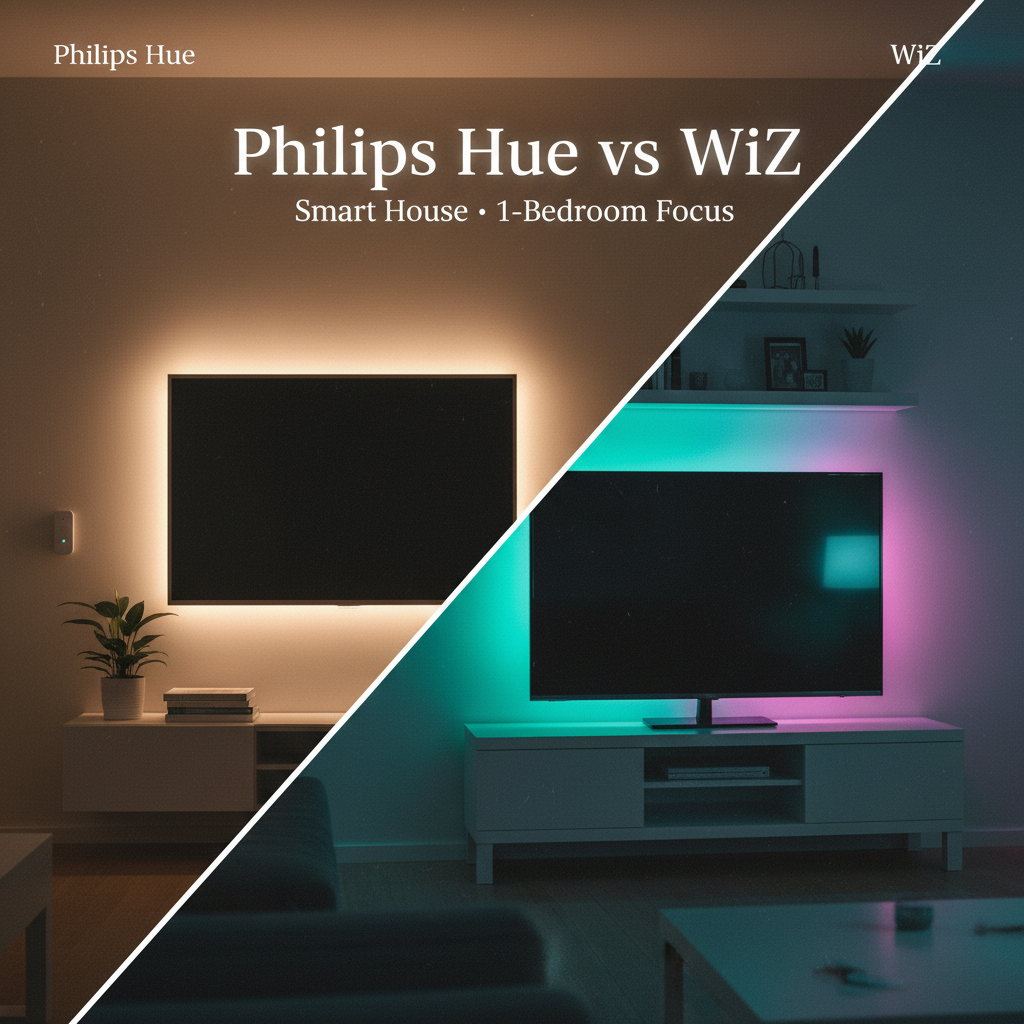
If you live in a one‑bedroom apartment, lighting is your most powerful tool to make the space feel bigger, calmer, and more functional. Two names dominate the conversation for renter‑friendly smart lighting: Philips Hue and WiZ. They’re sister brands under the same umbrella, but they take very different paths. Hue is the premium ecosystem known for rock‑solid reliability, smooth dimming, and a deep accessory lineup. WiZ is the value champion—simple setup over Wi‑Fi, strong features for the price, and no hub required.
This comparison is written with a 1‑bedroom in mind: one living room, one bedroom, a small hallway, and a compact kitchen. We’ll weigh setup, reliability, latency, automations, dimming quality, color accuracy, accessories, Matter support, and total cost so you can choose what fits your apartment and budget without overbuying.
What matters most in a 1‑bedroom
- Stable, fast response: lights should obey instantly, even on weak Wi‑Fi.
- Seamless dimming: comfortable low light for evenings without flicker or jumps.
- Guest‑friendly control: voice plus at least one physical button.
- Simple automations: sunset lighting, bedtime scenes, and “leave home” routines.
- Reasonable cost: you’ll likely need 4–8 bulbs/strips, so pricing scales quickly.
System overview: how Hue and WiZ differ
- Philips Hue
- Core idea: reliability first. Traditionally Zigbee with a Hue Bridge, plus growing Thread/Matter support. Huge accessory range (dimmers, motion sensors, tap switches).
- Best for: people who want “it just works,” excellent dimming curves, and local control with minimal cloud dependency.
- WiZ
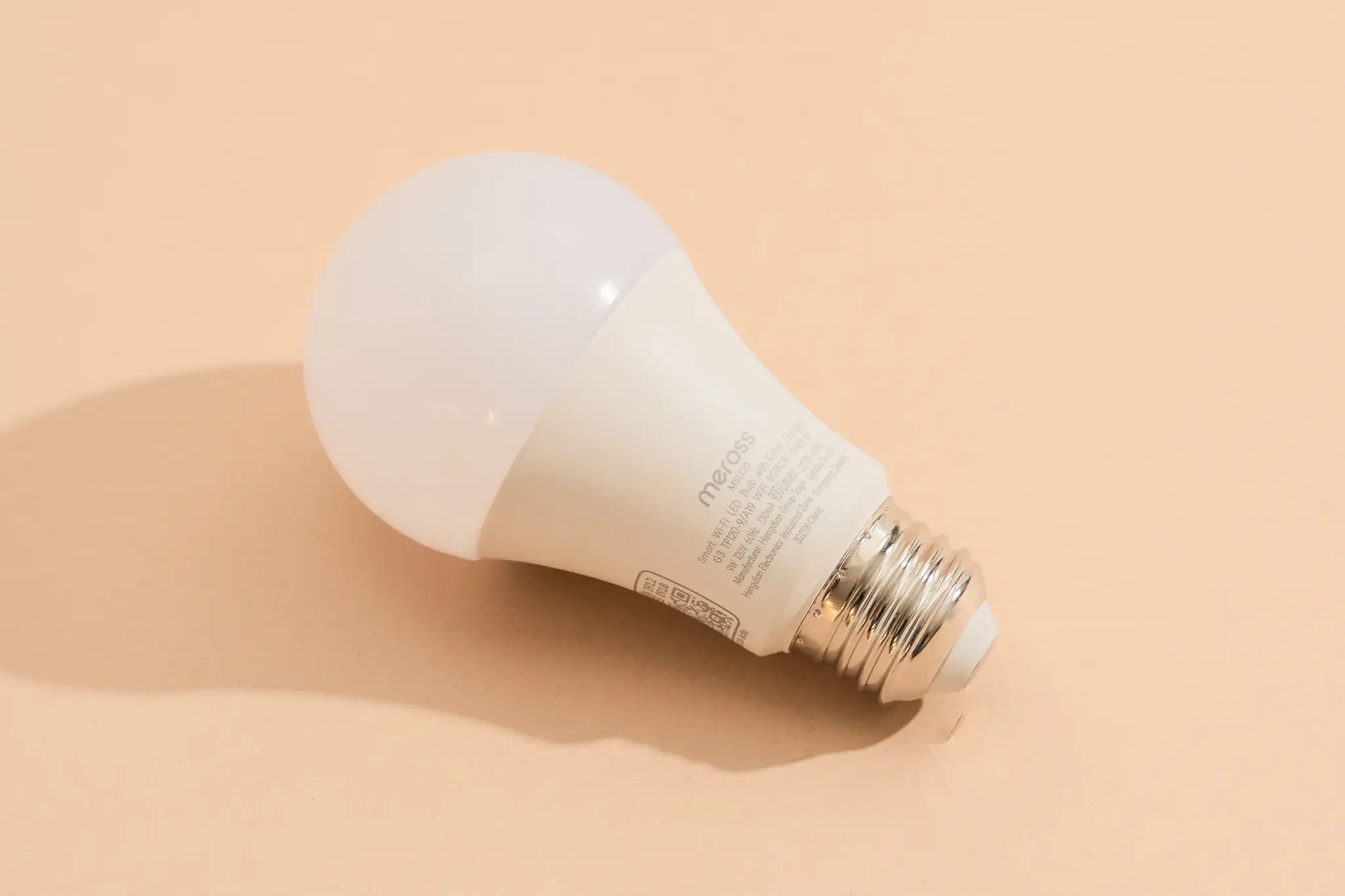
- Core idea: value and simplicity. Wi‑Fi bulbs and strips that pair quickly—no bridge required. Modern app with sensible scenes, good schedules, and clever presence features.
- Best for: renters on a budget who want 80% of the experience for a fraction of the cost.
Setup and pairing experience
- Hue with Bridge
- Pros: adding multiple bulbs is fast; the Bridge keeps everything local and snappy. Newer Hue devices can expose Matter via the Bridge for cross‑platform control.
- Cons: an extra box (Bridge) on your router; slightly higher upfront friction and cost.
- WiZ (Wi‑Fi)
- Pros: download app, power bulb, pair over 2.4 GHz—done. No hub, no extra cables. Easy to move apartment‑to‑apartment.
- Cons: performance can depend on your router quality and Wi‑Fi congestion.
Latency and reliability (day‑to‑day feel)
- Hue: near‑instant on/off and scenes, especially with a Bridge or Thread mesh. Motion sensors trigger lights with minimal delay—great for hallways and bathrooms.
- WiZ: good for Wi‑Fi, typically quick in normal conditions. If your network is busy (streaming, video calls, lots of IoT), you may see occasional half‑second delays.
Dimming quality and color accuracy
- Hue: famously smooth dimming at very low levels—lamps stay usable at 1–2% brightness without stepping. Color bulbs render saturated hues cleanly, and White Ambiance models cover a wide white range (warm to cool) with excellent consistency.
- WiZ: noticeably improved in recent generations. Dims well for most people’s needs; at very low levels some models step more than Hue. Whites are pleasing; colors are vibrant, though not as refined as Hue’s top tiers.
Automations and app features
- Hue app
- Strengths: rock‑solid room/group control, “Natural Light” (circadian) tuning, excellent accessory mapping (each button can run a different scene by time of day).
- Scenes: polished presets and dynamic scenes that transition smoothly.
- Local control: many actions work even if the internet blips, thanks to the Bridge.
- WiZ app
- Strengths: quick setup, room‑based scenes, vacation mode (presence simulation), motion integration via compatible sensors/cameras, and clever “Rhythms” for day‑to‑night transitions.
- Remote control: cloud‑friendly—great if you travel; depends more on internet uptime.
Voice assistants and smart home platforms
- Both play well with Alexa and Google Home. With Matter in the picture, cross‑platform control is easier than ever.
- Apple Home (HomeKit)
- Hue: works via the Bridge, and increasingly via Matter/Thread on newer models—Apple users get a very clean experience.
- WiZ: Apple control is improving via Matter‑enabled models/integrations; check the exact model for “Matter‑ready” status now, not “coming soon.”
Accessories and physical controls (critical for guests)
- Hue accessories (major advantage)
- Hue Dimmer Switch: map On/Off and multiple scenes; mount with removable adhesive by the door.
- Hue Tap Dial: dial dimming with scene buttons; feels premium.
- Hue Motion Sensor: fast triggers, adjustable sensitivity and lux, great for hallways/ bathrooms.
- Result: your apartment remains usable without pulling out your phone or shouting voice commands.
- WiZ accessories
- WiZ remote options exist but are fewer and simpler. Third‑party buttons can help, but the ecosystem depth is shallower than Hue’s.
- Workable solution: pair a basic wireless button (compatible) for On/Off + favorite scene; lean on voice for the rest.
Matter, Zigbee, Thread: the protocol angle
- Hue
- Zigbee + Bridge has been the gold standard for reliability, with the Bridge now exposing devices to Matter controllers.
- Thread models (where available) reduce hub dependency and keep latency low; great in apartments where Wi‑Fi is noisy.
- WiZ
- Primarily Wi‑Fi with growing Matter support over Wi‑Fi. The upside is pure simplicity; the trade‑off is reliance on your router quality.
Energy use and standby behavior
- Both brands sip power in standby (a few tenths of a watt typical). Real‑world differences are small—your usage patterns (brightness and hours) drive most of the bill.
- Tip: cap brightness at 70–80% in small rooms; visually similar to 100% but easier on eyes and hardware.
Cost comparison (typical 1‑bedroom kit)
Assume: living room ceiling or main lamp + 2 lamps, bedroom ceiling or lamp, small hallway, optional kitchen strip.
- Hue “reliability kit”
- 4–6 bulbs (mix of White Ambiance and Color) + 1 Hue Dimmer + (optionally) 1 Motion Sensor + Hue Bridge (if needed).
- Pros: premium feel, instant response, guest‑friendly physical controls, smoothest dimming.
- Cons: higher upfront cost; Bridge adds one more device to power and place.
- WiZ “value kit”
- 4–6 Wi‑Fi bulbs (mix of tunable white and color) + 1 budget remote/button + optional LED strip for TV or shelves.
- Pros: lowest cost to fill a 1‑bedroom with smart lighting; no hub.
- Cons: more dependent on router quality; fewer advanced accessory options.
Room‑by‑room recommendations
Living room (main light + mood lamps)
- Hue best fit: if you want reliable “Movie,” “Reading,” and “Warm Evening” scenes that always trigger instantly, and a Dimmer Switch by the door. Ideal when you host guests.
- WiZ best fit: if budget is tight but you still want tunable white by day and color for ambience at night. Place a simple remote on the coffee table; rely on voice for scene changes.
Bedroom (bedside + ceiling or floor lamp)
- Hue: low‑level dimming is superb for late‑night reading or midnight trips. Add a Tap Dial or Dimmer on the wall to avoid waking others with voice commands.
- WiZ: perfectly fine for bedside routines—set “Wind Down” to warm 2300 K at 20% each night. Add a basic button on the nightstand for On/Off.
Hallway and bathroom (motion‑based convenience)
- Hue: shines here. The Hue Motion Sensor is fast and configurable; set very low brightness at night to avoid glare.
- WiZ: possible if you add compatible motion devices, but configuration depth and trigger speed may not match Hue’s best‑in‑class feel.
Kitchen (task lighting and strips)
- Hue: White Ambiance bulbs or Hue‑compatible strips give clean whites and excellent reliability for meal prep.
- WiZ: budget‑friendly strip for cabinet under‑glow; ensure good CRI if you care about food color accuracy.
Case studies (1‑bedroom scenarios)
Scenario A — “I need it to just work” (reliability‑first)
- Gear: 4× Hue White Ambiance (living + bedroom), 1× Hue Color (living lamp), 1× Hue Dimmer (entry), 1× Hue Motion (hallway), Hue Bridge.
- Setup: Dimmer maps On to “Evening Warm,” Off to lights out; long press cycles scenes. Motion triggers 15% warm white at night.
- Result: instant response, silent operation, zero fumbling for phones. Guests instinctively use the wall button.
Scenario B — “I want smart lighting on a budget”
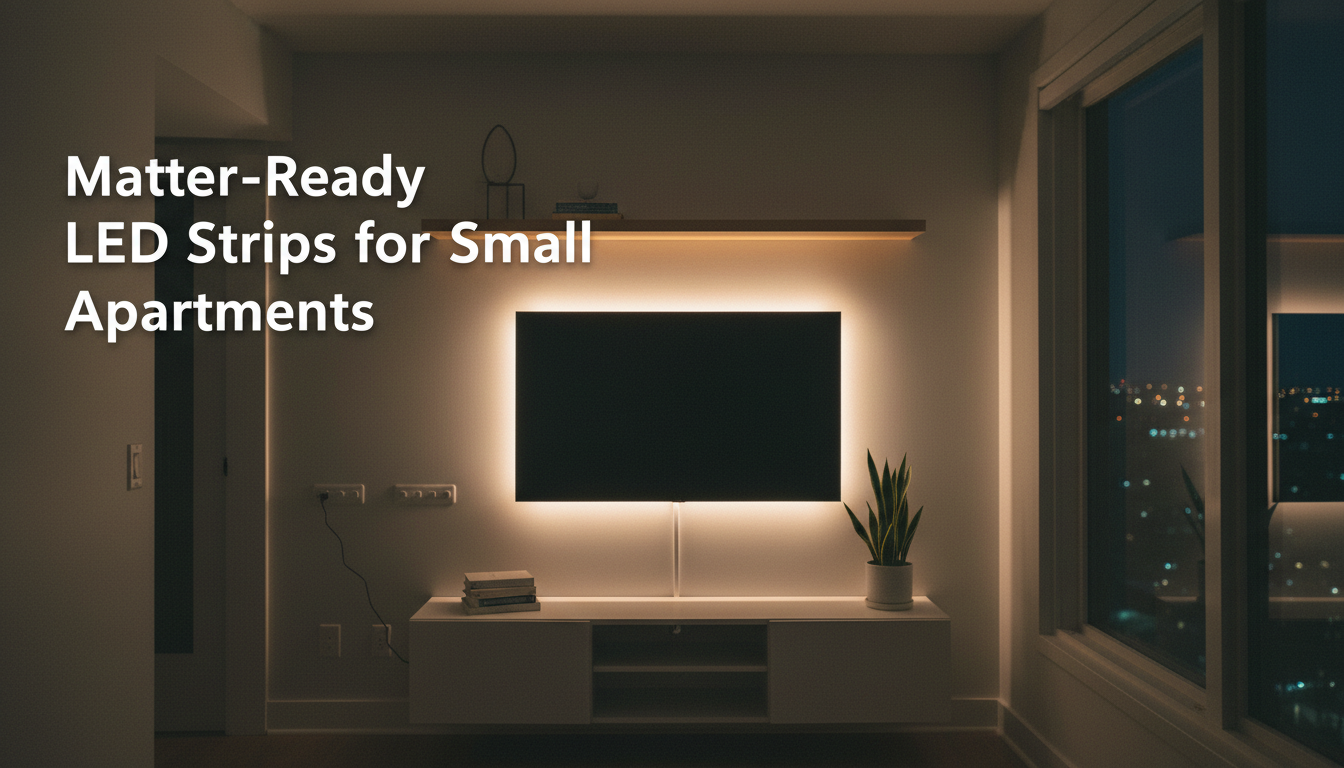
- Gear: 5× WiZ (3 tunable white, 2 color), 1× WiZ remote or compatible button, 1× Wi‑Fi LED strip behind TV.
- Setup: Rooms and scenes in WiZ app—Movie (warm 2700 K 30%), Reading (4000 K 70%), Night (2100 K 10%). Schedule sunset on, 23:30 off.
- Result: stylish, functional lighting for a fraction of Hue. Occasional half‑second delays during heavy streaming are acceptable for the savings.
Scenario C — “Balanced approach, a bit of both”
- Gear: Hue in the hallway/bedroom (motion + dimmer), WiZ in the living room (bulbs + TV strip).
- Setup: Let Hue handle latency‑sensitive areas, WiZ handle ambience where a small delay won’t matter.
- Result: spend where reliability matters most while keeping total cost moderate.
Guest and roommate friendliness
- Physical controls win. With Hue, place a Dimmer near the entry and another by the bedroom door. With WiZ, add a simple remote or smart button in the same spots.
- Clear naming helps: “Living Lamps,” “Bedroom Lamp,” “Hallway Night” are easy to say and recognize in voice assistants.
Privacy and local control
- Hue with a Bridge offers more local control options and keeps the system usable even if the internet is having a moment.
- WiZ leans more on cloud functionality. It’s convenient for remote control but depends on internet stability for the smoothest experience.
Matter in a 1‑bedroom: does it change the decision?
- Matter reduces platform lock‑in and makes mixed‑brand setups less painful. If you already own an Echo, Nest, or Apple TV, onboarding is easier.
- Hue benefits: the Bridge exposes devices cleanly to your platform; Thread variants cut Wi‑Fi noise.
- WiZ benefits: newer Matter‑enabled Wi‑Fi bulbs join ecosystems faster and more consistently.
- Bottom line: Matter helps both, but it doesn’t erase Hue’s hardware polish or WiZ’s price advantage.
Hidden costs and quality‑of‑life extras
- Hue: accessories add up—but they are excellent and long‑lived. Many users keep Hue gear for years across apartments.
- WiZ: lower bulb cost frees budget for an extra strip or two; experiment with ambience without guilt.
Decision guide: quick picks for a 1‑bedroom
Choose Philips Hue if:
- You value instant response and buttery‑smooth dimming.
- You want reliable motion‑based lighting in hallways/bathroom.
- You prefer physical controls that guests immediately understand.
- You’re okay paying more upfront for a system you won’t have to babysit.
Choose WiZ if:
- You want the lowest cost path to a fully smart 1‑bedroom.
- Your router is decent and you’re okay with occasional Wi‑Fi moments.
- You prioritize quick setup, clean scenes, and cloud‑friendly remote control.
- You want to start small: one room at a time, no hub required.
Practical buying lists
Hue “starter for 1‑bedroom”
- 2× Hue White Ambiance (living main + bedroom main)
- 2× Hue Color (living lamp + accent)
- 1× Hue Dimmer (entry)
- 1× Hue Motion (hallway)
- Hue Bridge (if your bulbs aren’t Thread‑based or you want the classic stability)
WiZ “starter for 1‑bedroom”
- 3× WiZ Tunable White (living main + bedroom main + hallway)
- 2× WiZ Color (living lamp + accent)
- 1× WiZ‑compatible remote/button
- 1× Wi‑Fi LED strip (behind TV or shelf)
Tips to make either system shine
- Cap peak brightness at 70–80% indoors—more comfortable, less glare.
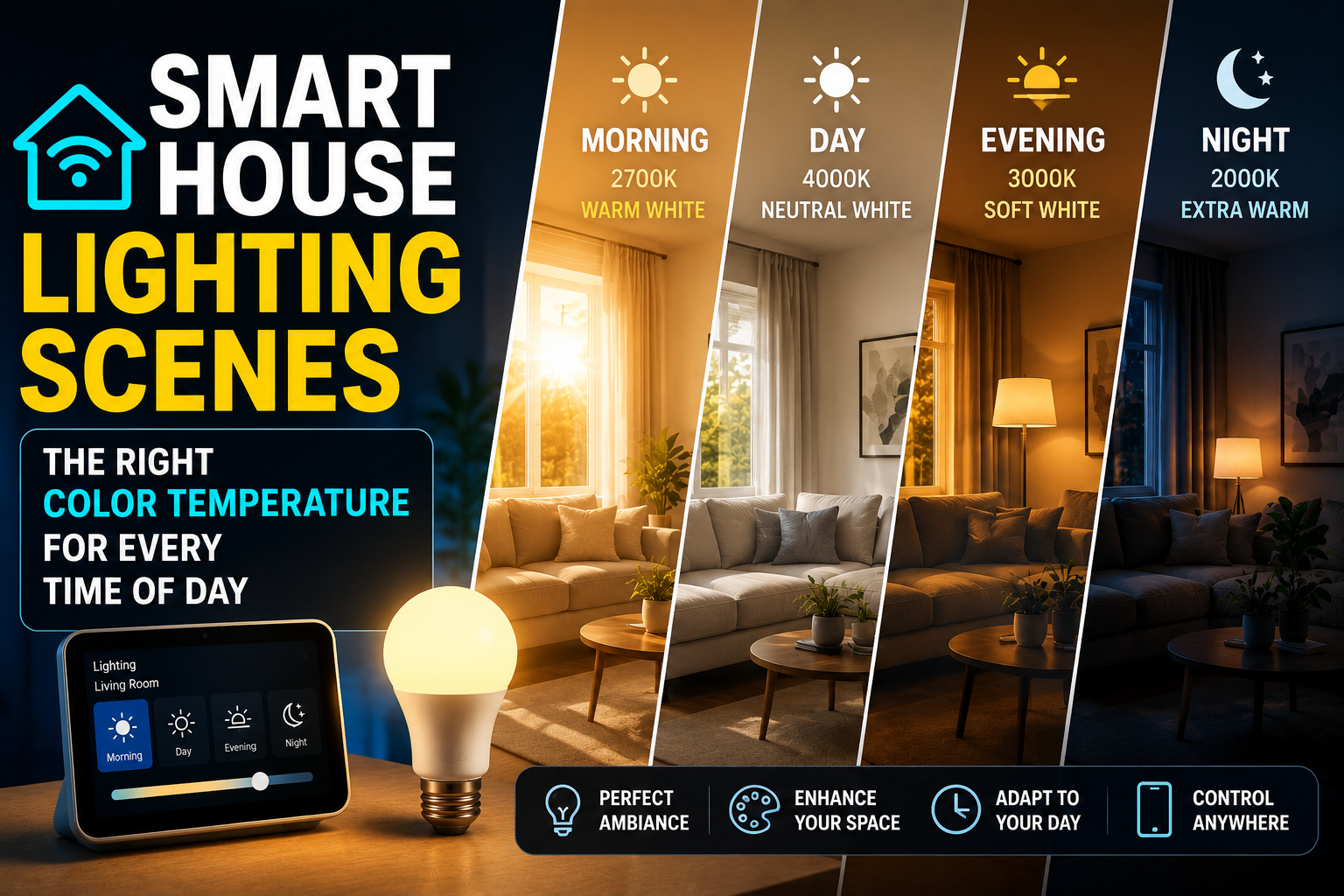
- Use warm whites (2200–2700 K) after sunset; keep a neutral white (3500–4000 K) for reading or work.
- Create 3–4 core scenes per room and reuse names across apps to avoid confusion.
- Add at least one physical control per main room—guests will thank you.
- Group devices meaningfully (“Living Lamps,” “Bedroom Main”) for faster voice/scene targeting.
Conclusion
For a one‑bedroom smart house, both Philips Hue and WiZ can deliver a big upgrade with zero drilling. Hue is the premium, reliability‑first choice: instant response, luxurious dimming, and class‑leading accessories that make lighting feel invisible and intuitive. WiZ is the value hero: quick Wi‑Fi setup, strong features for the price, and easy expansion room by room.
If you want lighting that simply works every single time—and you’ll use motion sensors and wall buttons—Hue earns the spend. If you’re optimizing for cost and still want polished scenes and cross‑platform control via Matter, WiZ is a smart, renter‑friendly pick. Either way, start with a tight set of scenes, add at least one physical control per room, and let your apartment feel bigger, calmer, and more “you” the moment the lights go on.