
The universal smart home standard promised to fix everything. Here’s an honest look at where it delivers — and where it still lets you down.
When Matter was announced, the smart home industry collectively exhaled. Finally, a single open standard backed by Apple, Google, Amazon, and Samsung that would let your devices talk to each other regardless of brand. No more walled gardens. No more buying a bulb only to discover it doesn’t work with your existing hub. No more choosing sides.
That was the promise. And to be fair, some of it has come true. But if you’ve spent any time actually living with Matter devices — buying them, setting them up, troubleshooting them at 11pm when the kitchen lights stop responding — you know the picture is more complicated. Matter is real progress. It’s also a standard in the middle of growing up, with real gaps that don’t show up in product descriptions.
This article is for people who want to understand what Matter actually does in a real home today, what device categories have genuinely benefited from it, and where you’re better off waiting or looking elsewhere.
What Matter Actually Is (Without the Marketing Fluff)
Before getting into specifics, it’s worth being clear about what Matter is and isn’t, because there’s still a lot of confusion around it.
Matter is an application-layer protocol — it defines how smart home devices communicate at the software level, not the hardware level. It runs on top of existing wireless technologies: Wi-Fi, Thread (a low-power mesh networking protocol), and Ethernet. Bluetooth Low Energy is used for device commissioning (the initial setup process), but not for ongoing communication.
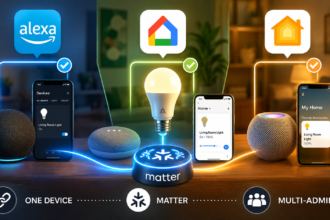
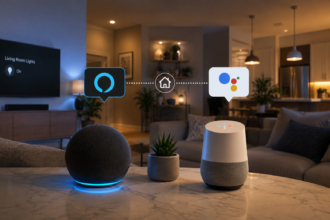
What this means practically is that a Matter-certified smart plug, for example, can be added to Apple Home, Google Home, Amazon Alexa, and Samsung SmartThings simultaneously, without any bridge or workaround. Each platform has a full, direct connection to the device. You’re not sharing access — you’re duplicating it across platforms. That’s a meaningful achievement.
What Matter is not is a magic compatibility layer between older non-Matter devices and newer ecosystems. Your existing Zigbee sensors, Z-Wave locks, and proprietary Wi-Fi devices don’t become Matter-compatible retroactively. Some hubs — like the Aqara M2 or certain Philips Hue bridges — can expose their connected devices as Matter accessories, which is genuinely useful, but it’s a bridge solution, not native support.
Where Matter Is Working Well Right Now
Smart Plugs and Outlets
If there’s one category where Matter has delivered cleanly and consistently, it’s smart plugs. The protocol handles on/off control and energy monitoring well, the devices are simple enough that cross-platform compatibility rarely causes edge cases, and the commissioning process — scanning a QR code during setup — is relatively painless compared to what it used to be.
Brands like Eve, Meross, and Kasa have shipped Matter-enabled plugs that genuinely work across ecosystems without drama. A plug added to Apple Home can also be controlled through Google Home, and automations on both sides operate independently. For renters or households with mixed platform preferences — one person deep in the Apple ecosystem, another on Android — this is a real quality-of-life improvement.
The energy monitoring features available on some Matter plugs are worth mentioning specifically. Eve Energy, for instance, exposes per-device power consumption data natively through Matter, which can be pulled into any compatible platform. This kind of data visibility used to require proprietary apps. Now it’s part of the standard.
Smart Lighting — With Some Caveats
Lighting was always going to be a flagship category for Matter, partly because it’s the most common smart home starting point and partly because the fragmentation in this space has been genuinely painful. Zigbee bulbs that only worked with specific hubs, Wi-Fi bulbs with apps that got abandoned, proprietary systems that locked you in — the lighting category was a mess.
Matter has improved things considerably for white-ambiance and color bulbs, particularly when using Thread as the underlying protocol. Thread’s mesh networking means bulbs can serve as routing nodes, improving range and reliability across the whole network. Nanoleaf’s Matter Thread bulbs are a good practical example: they set up quickly, integrate cleanly with multiple platforms, and maintain solid connectivity without a dedicated hub.
The caveat here is scenes and advanced lighting features. Matter’s current specification for lighting covers brightness, color temperature, and color — the basics. But things like dynamic effects, gradient lighting, or synchronized multi-zone scenes are not yet part of the standard. Brands that offer these features still rely on their own apps or proprietary protocols for them. So while your Philips Hue bulbs may be Matter-compatible for basic control, the Entertainment Areas and synced movie lighting still live in the Hue app. You’re not getting rid of proprietary software entirely; you’re just getting a parallel layer of basic control.
Thread Border Routers Are the Quiet Heroes
One of the less-discussed but more important developments in the Matter ecosystem is the proliferation of Thread border routers. These are devices that bridge the Thread mesh network to your IP-based home network, and they’re increasingly built into products you already have: Apple HomePod mini and second-gen HomePod, Apple TV 4K, Google Nest Hub (2nd gen), Amazon Echo (4th gen).
What this means for a real home is that Thread-based Matter devices — sensors, smart plugs, bulbs — can maintain reliable connectivity without adding yet another hub. The border router functionality is baked into devices that are already sitting on your shelf. This has meaningfully reduced the setup complexity that plagued earlier smart home systems, and it’s one area where the Matter ecosystem has exceeded initial expectations.
Where Matter Still Falls Short
Locks, Sensors, and Security Devices
The gap between Matter’s promise and reality becomes most visible in security-adjacent categories. Smart locks with Matter support exist — the Yale Assure Lock 2 and Schlage Encode Plus are the most prominent examples — but the Matter specification for locks is currently limited to basic lock/unlock and status reporting. Features like access code management, activity logs, auto-lock schedules, and guest access often require the manufacturer’s app because they’re not yet part of the Matter lock cluster specification.
This isn’t a permanent limitation — the Matter standard is actively developed, and future revisions will expand what’s standardized for locks — but it means that right now, buying a Matter lock doesn’t simplify your life as much as the marketing suggests. You’re still maintaining a relationship with the manufacturer’s ecosystem for anything beyond the basics.
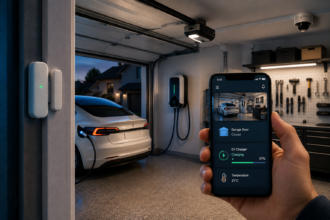
Door and window sensors are another area of frustration. While Matter does support contact sensors in its specification, the practical selection of Matter-native contact sensors is still thin, and Thread-based sensors that are small, affordable, and reliable are rare. Aqara’s Thread sensors (exposed via the M2 hub as Matter) are probably the best current option, but it’s a bridged solution. For someone building out a whole-home sensor network, Matter’s current native sensor story is weak.
Cameras and Video Doorbells
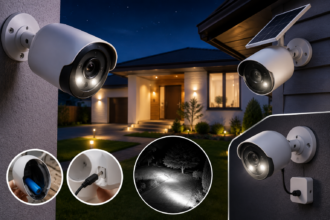
If you’re shopping for a smart home camera or video doorbell and hoping Matter will make it ecosystem-agnostic, you’re going to be disappointed. The Matter specification for cameras and video is still in development. As of now, Matter does not support live video streaming, camera history, motion zones, or any of the features that make a smart camera useful. Some cameras are marketed as “Matter-compatible” because they support Matter for non-video functions — like triggering automations when motion is detected — but the video itself still lives in a proprietary platform.
This means Ring cameras still live in Alexa’s world, Arlo cameras still require the Arlo app for video, and Nest cameras are still Google-first. If cross-platform camera control is important to you, Matter is not the answer yet. Keep watching this space, but don’t make purchasing decisions based on it.
Thermostats — Better Than Before, But Still Tricky
Matter thermostats exist and work reasonably well for basic heating and cooling control. The ecobee SmartThermostat Premium with Matter support is the clearest example: it integrates natively with Apple Home, Google Home, and Alexa simultaneously, and the basic temperature control and scheduling function across all three.
The problem is that most thermostats worth buying have significant features above the baseline — ecobee’s smart room sensors, Nest’s learning algorithms, Honeywell’s multi-stage HVAC logic — none of which are standardized in Matter. These features are what you’re actually paying for, and they still live in proprietary apps. Matter thermostat support is useful as a convenience layer, but it doesn’t change which thermostat you should buy based on HVAC compatibility or advanced features.
Practical Advice for Building a Matter-First Smart Home
Given all of the above, what does a sensible approach to Matter actually look like in practice?
Start with Thread infrastructure
Before buying Matter devices, make sure your home has solid Thread border router coverage. If you’re in the Apple ecosystem, a HomePod mini in each main living area costs under $100 and gives you both a Thread router and a local home hub. Google Nest Hub (2nd gen) devices serve the same function for Google Home. Getting Thread infrastructure right first means your Matter devices will have the network they need from day one.
Buy Matter for the right categories now
Plugs, basic lighting, and whole-home switches are where Matter earns its keep today. These are the categories where multi-platform support is actually useful and where the Matter specification covers everything you need. Don’t buy Matter devices for cameras, complex sensor networks, or advanced security systems expecting the standard to cover you — it won’t, not yet.
Keep proprietary ecosystems for specialized functions
This is the nuance that a lot of “Matter will fix everything” coverage misses: Matter and proprietary systems aren’t mutually exclusive. Your Hue bridge can be a Matter controller and still run Entertainment Areas through its own app. Your Nest thermostat can be Matter-accessible and still learn your schedule through Google Home’s algorithms. The healthiest approach to a smart home in 2025 isn’t “go all-in on Matter” — it’s using Matter where it genuinely simplifies things while keeping the proprietary layers that add real value.
Watch the specification updates closely
Matter is developed by the Connectivity Standards Alliance (CSA), and new device types and expanded functionality are added in periodic releases. Matter 1.2 added robot vacuums and refrigerators. Matter 1.3 brought energy management improvements. Cameras and video doorbells are on the roadmap. If you’re planning a larger smart home investment, understanding the spec roadmap helps you make better timing decisions about which categories to buy now versus wait on.
Conclusion: Honest Progress in a Complicated Space
Matter is not the revolution it was occasionally hyped as. But it is genuine, meaningful progress — and that’s actually more useful in the long run than a revolution would have been. The smart home industry needed a shared language, and Matter is becoming that language, one device category at a time.
What works today: smart plugs, basic lighting, Thread infrastructure, and multi-platform access for common device types. What to avoid expecting Matter to solve: cameras, advanced sensors, and anything that depends on manufacturer-specific features to be useful.
The homes that get the most out of Matter right now are the ones that treat it as a foundation layer — something that handles baseline control across platforms — while layering proprietary systems on top for the things that actually make smart home technology worth having. That’s not a perfect solution. But it’s a realistic one, which is more than the smart home world has had for a long time.