
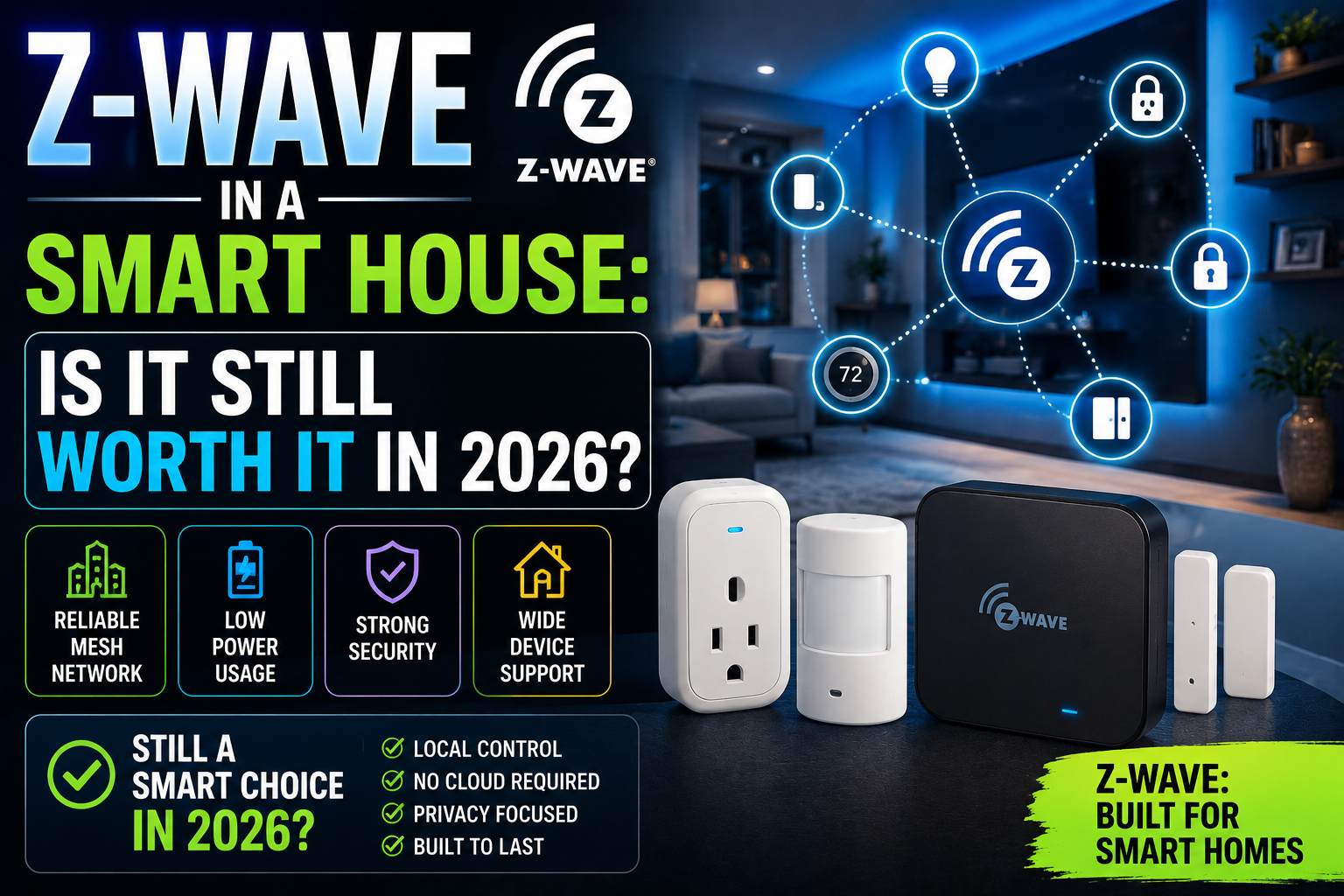
Every conversation about smart home protocols eventually arrives at the same shortlist: Zigbee, Wi-Fi, Thread, and Matter. Z-Wave tends to get mentioned briefly — usually described as “older” or “more expensive” — before the article moves on to something else. The result is that a lot of people building smart homes in 2026 have a vague sense that Z-Wave exists but no real understanding of what it does differently, when it makes sense, or whether it’s worth the premium it commands over Zigbee alternatives.
The honest answer is more nuanced than the usual dismissal suggests. Z-Wave is genuinely older than Zigbee, and it is more expensive. But it operates on a fundamentally different radio frequency than everything else in your home, it has the most mature and battle-tested mesh implementation of any consumer smart home protocol, and its certification requirements mean that interoperability between devices actually works the way it’s supposed to — something that Zigbee, despite its theoretical openness, has historically struggled with. Whether those properties justify the cost depends entirely on what you’re building and what problems you’re trying to solve.
This article makes the honest case for Z-Wave, the honest case against it, and gives you the framework to decide whether it belongs in your setup.
What Z-Wave Actually Is and How It Differs From Zigbee
Z-Wave is a wireless mesh protocol developed in the late 1990s and commercialized in the early 2000s by a Danish company called Zensys, which was eventually acquired by Silicon Labs. Unlike Zigbee and Wi-Fi, which operate in the crowded 2.4GHz frequency band, Z-Wave operates at 800–900MHz depending on the region (868MHz in Europe, 908MHz in the US, 916MHz in Australia). This difference in operating frequency is the single most important technical property Z-Wave has, and it’s the reason the protocol still earns its place in serious smart home setups despite being considerably older than its competition.
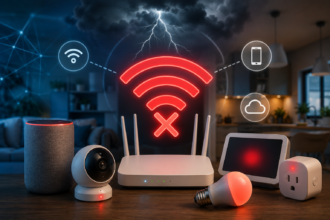
The 2.4GHz band is genuinely congested in most homes. Your Wi-Fi network is there. Your neighbor’s Wi-Fi network is there. Your microwave is there. Your Zigbee devices are there. Bluetooth is there. This congestion doesn’t necessarily cause problems — modern protocols handle interference through techniques like frequency hopping and channel selection — but it does mean more competition for the same spectrum, and in dense apartment buildings with dozens of overlapping networks, it can cause reliability issues that are difficult to diagnose.
Z-Wave at 868–908MHz sits in essentially empty spectrum in most residential environments. There’s no Wi-Fi there. No Bluetooth. No microwaves. The signal travels farther through walls and floors than 2.4GHz signals (lower frequencies penetrate building materials more effectively), and in a busy radio environment, Z-Wave devices are listening to a frequency where almost nothing else is talking. This translates directly to reliability: Z-Wave devices in challenging RF environments — concrete buildings, homes with lots of interference, multi-story setups where signal needs to travel between floors — tend to perform more consistently than Zigbee alternatives.
The other significant technical difference is the certification process. Every device that carries the Z-Wave certification has been tested for interoperability with other certified Z-Wave devices by the Z-Wave Alliance. In practice this means you can reasonably expect a Z-Wave sensor from manufacturer A to pair with a Z-Wave hub from manufacturer B and work correctly — without needing to check forum threads to confirm that the specific firmware version of the sensor is compatible with the specific version of the hub software. Zigbee has a similar interoperability standard on paper (Zigbee 3.0), but the practical track record of cross-manufacturer Zigbee compatibility has been considerably more variable.
The Z-Wave 800 Series: Why 2026 Is Actually a Good Time to Revisit This
The Z-Wave 800 chip series, released in 2022 and now widely deployed across new devices, addressed several of the protocol’s historical weaknesses in ways that make the 2026 device landscape meaningfully better than it was a few years ago.
Battery life improved dramatically. Z-Wave 800 devices can run for years on a single CR2032 cell in typical usage patterns — a meaningful advantage over Zigbee sensors that often need annual battery replacement. Range increased to up to 200 meters in open air (considerably less through walls, but still improved from previous generations). And crucially, the 800 series supports long-range Z-Wave, a point-to-point mode that allows direct communication between device and hub over long distances without relying on mesh routing — useful for detached garages, outbuildings, or any setup where a mesh path might be unreliable.
The device ecosystem has also expanded. Aeotec, Fibaro, Zooz, and HomeSeer all offer Z-Wave 800 series devices across sensor, switch, plug, and lock categories. The range isn’t as broad as Zigbee’s — there are far more Zigbee manufacturers — but the quality floor is higher because of the certification requirements, and the most common device categories (door/window sensors, motion sensors, smart plugs, dimmers, locks) are well covered.
Where Z-Wave Makes the Most Sense
The use cases where Z-Wave’s properties justify its cost premium over Zigbee are fairly specific, but genuinely common.
Smart locks are the clearest example. A smart lock is a security-critical device where reliability matters more than almost any other property. It needs to respond correctly every time, from a position that’s often at the periphery of a mesh network (the front door, typically the furthest point from the central hub), through a door frame that may have metal reinforcement that attenuates RF signals. Z-Wave’s superior penetration at 868–908MHz, its reliable mesh, and the robust Z-Wave certification of major lock manufacturers (Yale, Schlage, and Kwikset all offer Z-Wave variants of their popular models) make it the protocol of choice for this application. Plenty of people use Zigbee or Wi-Fi locks without issues, but if lock reliability is a priority, Z-Wave is the more defensible choice.
Multi-story homes and apartments in concrete buildings are the second strong use case. A typical Zigbee mesh works well in a single-story home where devices are relatively close together and signals don’t need to travel through multiple concrete slabs. In a two or three-story home, or in a European apartment building with concrete construction throughout, Zigbee meshes can become unreliable at the edges. Z-Wave’s lower frequency travels more effectively through dense materials, and because Z-Wave devices all act as mesh repeaters (with the exception of battery-powered sensors), the network is self-healing and self-extending in a way that performs more consistently in challenging building environments.
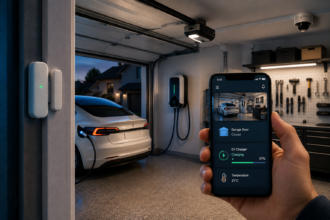
Large properties with detached structures benefit from Z-Wave long range in ways that standard mesh protocols can’t match. If you want to monitor a garage, a workshop, a garden shed, or any outbuilding, Z-Wave long range can reach hundreds of meters from the hub with a single direct connection — no need to build a mesh path through intermediate devices.
Security sensor applications more broadly are a natural fit for Z-Wave because the sensor devices are well certified, battery life is excellent, and the protocol has the lowest latency of any mesh protocol in typical residential deployments. A door sensor that reports to a hub in under 100 milliseconds is more useful for alarm applications than one that takes 300–500 milliseconds to traverse a Zigbee mesh, and Z-Wave’s direct acknowledgment protocol (every message is acknowledged by the receiving device) means you have high confidence that a sensor event actually reached the hub rather than being dropped silently.
Where Z-Wave Doesn’t Make Sense
For lighting specifically, Z-Wave is rarely the right choice. Smart bulbs are the highest-volume category in smart home hardware, and the Z-Wave lighting ecosystem is significantly smaller and more expensive than Zigbee’s. A Zigbee bulb from IKEA, Philips, or Sonoff costs $8–20 and offers excellent performance. An equivalent Z-Wave bulb is harder to find, often more expensive, and brings no practical advantage for a lighting application where reliability requirements are lower than for a lock or a security sensor. If you’re building a Zigbee lighting system and also want Z-Wave sensors, running a dual-protocol setup through Home Assistant (which handles both simultaneously with separate coordinators) is the standard approach and works well.
Cost is a genuine barrier at scale. A Z-Wave motion sensor costs $30–50, where a comparable Zigbee sensor might cost $15–25. For a small number of critical sensors — a few door contacts, a motion sensor in the main entryway — this premium is easy to justify. For a whole-home deployment covering every window and every room, the cost difference adds up quickly. Budget-constrained setups are almost always better served by Zigbee.
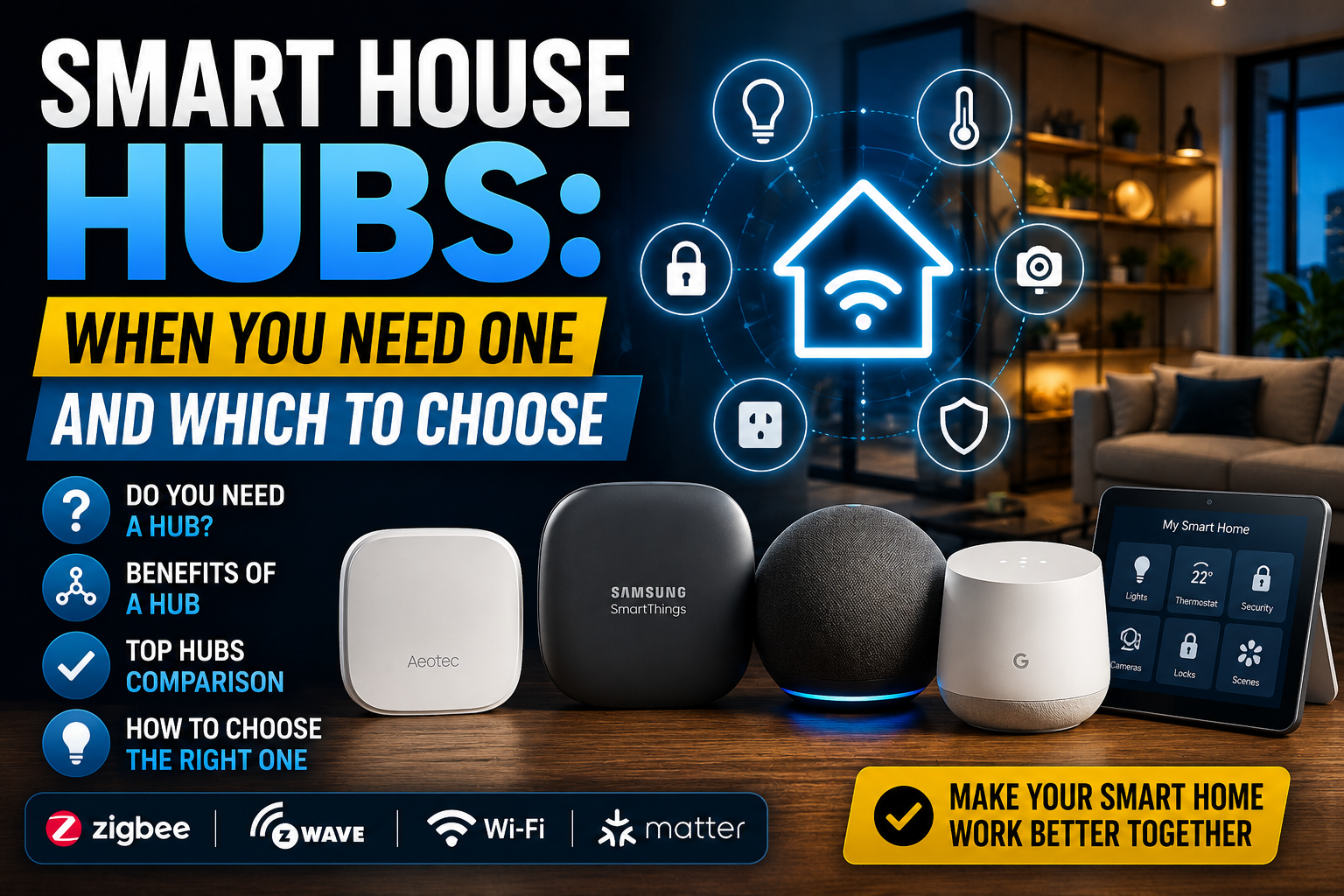
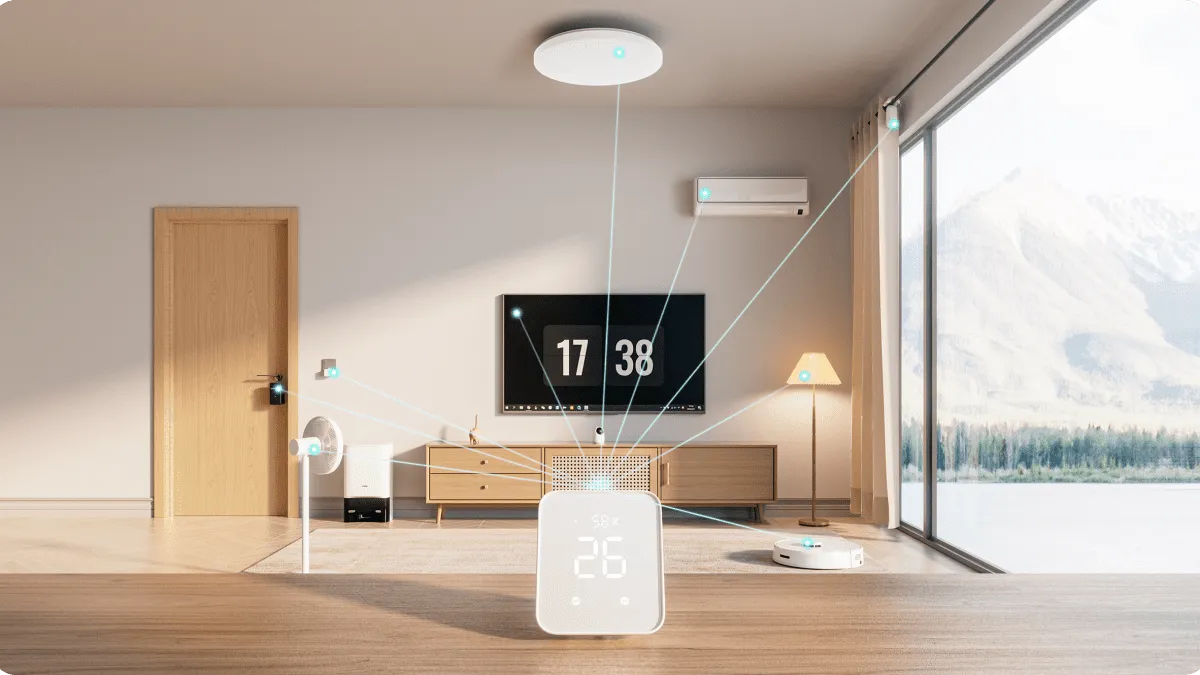
The hub requirement is worth noting clearly: Z-Wave requires a hub. There are no Z-Wave devices that connect directly to a Wi-Fi network and work without a coordinator — every Z-Wave setup needs a Z-Wave controller. The most capable option for home users is a Zooz 800 series USB stick ($40–50) paired with Home Assistant, which gives you full access to the Z-Wave JS integration and the entire Z-Wave device ecosystem. SmartThings hubs support Z-Wave natively. Dedicated Z-Wave hubs from Aeotec and HomeSeer are available but more expensive and more specialized. If you’re not already running a hub-based system, Z-Wave’s hub requirement adds a setup step that Zigbee also requires but that Wi-Fi devices don’t.
Running Z-Wave Alongside Other Protocols
The most common smart home setup that includes Z-Wave isn’t a Z-Wave-only system — it’s a hybrid that uses Z-Wave for the applications where its properties matter (locks, security sensors, devices in challenging locations) and Zigbee or Wi-Fi for everything else (lighting, smart plugs, displays). Home Assistant handles this elegantly: a Zigbee coordinator (SkyConnect, SONOFF Zigbee 3.0 USB Dongle) and a Z-Wave controller (Zooz ZST39 or Aeotec Z-Stick 7) can run simultaneously on the same Home Assistant instance, with all devices appearing in the same unified interface and participating in the same automations regardless of which protocol they use.
This hybrid approach is, honestly, how most experienced smart home users build their setups. The protocol question isn’t “which one” but “which one for which device category” — and Z-Wave has a clear answer for the categories where its properties are differentiated.
The Honest Bottom Line
Z-Wave is not the right protocol for every smart home or every device category within a smart home. It’s more expensive than Zigbee, the device ecosystem is smaller, and for applications like lighting where reliability requirements are modest and device counts are high, Zigbee is simply more practical.
But Z-Wave is the right choice for specific applications: smart locks, security sensors in challenging RF environments, devices in multi-story or concrete construction buildings, and anything where the combination of superior range, interference immunity, and certified interoperability justifies a cost premium. The Z-Wave 800 series has significantly improved the protocol’s battery life and range characteristics, making 2026 a genuinely better time to deploy Z-Wave than it was a few years ago.
If you’re building a smart home with any of those specific applications in mind — particularly smart locks or a DIY alarm system — Z-Wave deserves serious consideration rather than dismissal. The protocol has been declared dead by industry commentators roughly every two years for the past decade and continues to be the dominant choice for security-focused smart home hardware among experienced installers. There’s a reason for that, and it comes down to the properties that matter most when a device needs to work correctly every single time.